
Heavy Gear. Oversized Surcharges. Priced by Weight, Not Air.
Sporting goods, fitness, and outdoor brands pay dimensional weight surcharges priced on the size of the box, not the weight of the product. A kayak or a treadmill costs far more to ship than its scale suggests. With category growth slowing from 7% to a projected 6%, freight is one of the most recoverable line items left, and most brands accept the surcharges for lack of a better reference point.
ShipSigma provides one. Our freight experts and AI, trained on over 20 billion live datapoints, show you exactly what comparable shippers are actually paying.

Trusted by Thousands. Saving Millions.









Why ShipSigma?
Scale, stated plainly.
Our proprietary cost modeling is built into an easy-to-use online platform that sets the industry standard for the small parcel market by providing advanced, enterprise-level solutions for all businesses.
0%
Average Shipper Savings
$0K+
Saved by One Shipper in Under 4 Hours
0 Days
Avg Time to EBITDA Impact
“We could not say enough good things about our relationship with ShipSigma. Beyond the initial savings, they continue to find us new angles for savings, set up dashboards specific to our needs, and meet with us quarterly to go through reporting/review savings/new opportunities. ShipSigma has been more than just a service for us, they have been a continuous partner as we navigate the difficulties of controlling our freight costs and holding the vendors accountable.”
“4 hours. It took less than 4 hours of my time for my company to see half a million in annual savings. No headaches, no feet-dragging negotiations, no confusing documents. It was so easy.”
“The insights and analytics, ShipSigma provided before and after negotiating our carrier agreements, make it clear we have a long-term partner who is aligned with our company values. The cost modeling and rate simulation let us know the exact savings we would see, down to the last cent. After running our historical data, ShipSigma was able to find us almost 28% in annual shipping savings with our same carrier.”
“Our team managed billions of dollars of various category spend. To have ShipSigma guarantee a savings and then fully execute so that we’re realizing increased EBITDA within 60 days allows us to focus on other strategic opportunities.”
“We thought we had the best rates. We were told we had the best rates. ShipSigma got us better rates. They found us nearly 25% in savings and helped us renegotiate our contract with our carrier. It was just so easy.”
“The parcel invoice audit was a lifesaver for us. The team at ShipSigma monitored the weekly audit and noticed that instead of shipping air, over 60% of our packages could have traveled ground with no delay in arrival. They saved us more money than we had ever saved in our manual audit process.”
CARRIER CONTRACT OPTIMIZATION
Oversized Surcharges Are Negotiable. Your Carrier Would Rather You Didn't Know.
Carriers build pricing structures specifically for big, heavy gear, then present those rates as if they were fixed. Your carrier is counting on you to leave these alone:
- The dimensional weight surcharge your rep treats as non-negotiable
- The oversized-handling fee that resets higher every January
- The lane where your heavy gear costs the most and gets reviewed the least
INVOICE AUDIT & RECOVERY
Carrier Billing Errors Are Costing You Money
Oversized and heavy shipments are the most error-prone freight there is: dimensional recalculations, handling adjustments, and accessorial corrections that no hand-audit catches at volume. ShipSigma audits every invoice, every week. Where the recoverable money actually hides:
- The dimensional weight charges carriers get wrong most
- The damage and loss claims on heavy items that expire before anyone files them
- What one month of recovered claims adds back to your P&L
SHIPPING INTELLIGENCE & ADVISORY
The Costs That Creep In Between Negotiations
Carriers change pricing all year through rate increases, dimensional weight rule updates, and oversized-surcharge adjustments. Heavy-gear shippers absorb more of it than most. ShipSigma watches every change and tells you what it means for your lanes. What most sporting goods teams find out about too late:
- The dimensional weight rule change that quietly raises the cost of every oversized box
- The rate increase you could plan around instead of absorb
- What a quarterly review catches that an invoice never will
LTL & OPTIMIZED FREIGHT
Your Biggest Items Are Probably Shipping at the Wrong Rate.
Heavy, oversized gear is a natural LTL candidate, but most programs keep moving it as parcel and pay a premium for the privilege. ShipSigma runs parcel and LTL from a single program and puts each shipment on the cheaper mode. What you only see when both modes are run together:
- The big-item shipments that should leave parcel for LTL today
- The freight-class mistake that quietly inflates every LTL invoice
- What seeing both modes at once changes about your next negotiation
THE SHIPSIGMA GUARANTEE
No Carrier Changes. No Disruption. Savings Guaranteed Before You Sign.
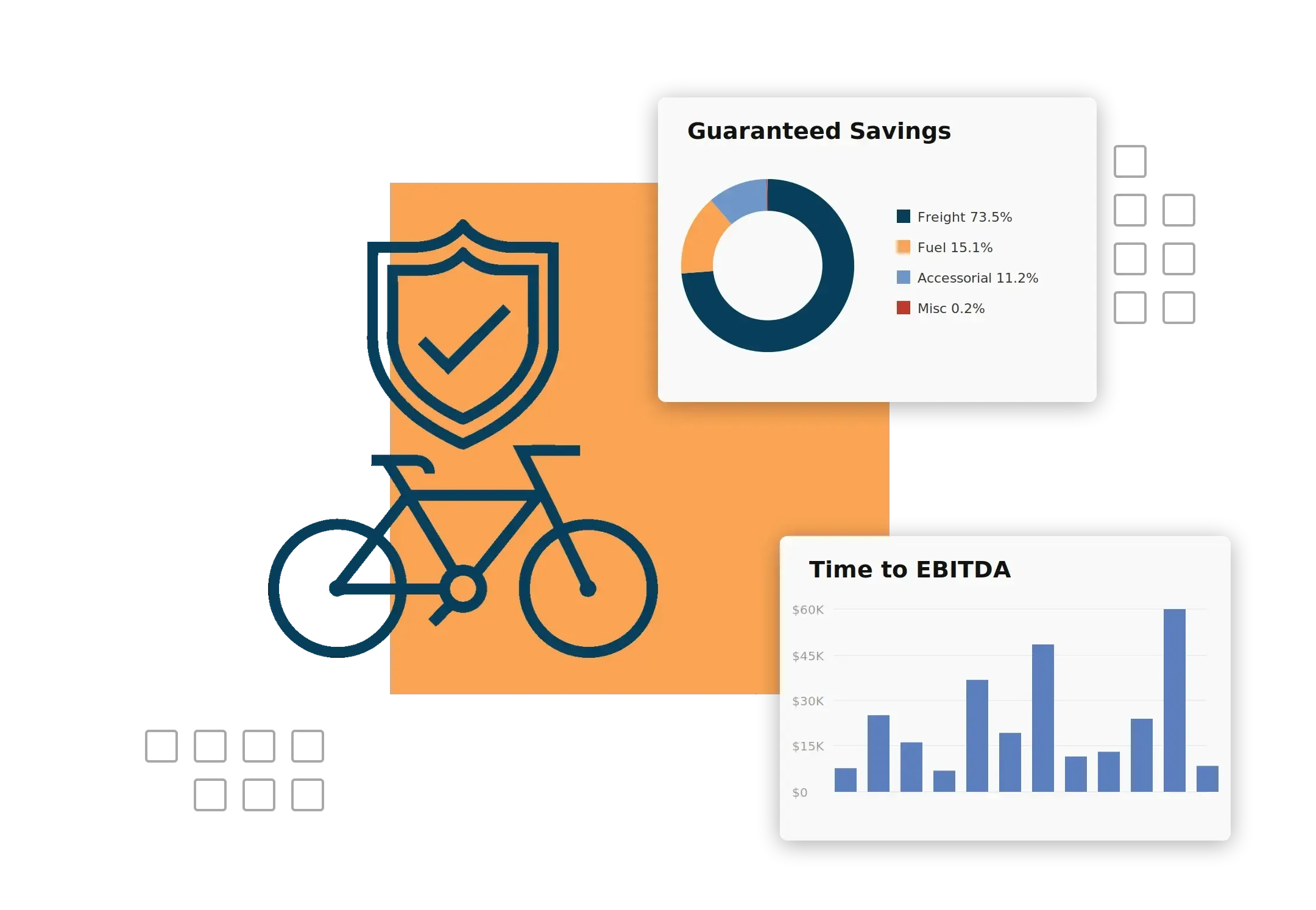
ShipSigma is compensated on savings delivered. Most sporting goods clients see EBITDA impact within 60 days. What first-timers do not see coming:
- The number you see before you sign anything
- How little of your team's time the whole process takes
- How one shipper saw $500K in savings before lunch
Your Carriers Know What You Should Be Paying. Let’s Find Out Together.
Most sporting goods companies don't know they're overpaying until an objective review proves it, especially on the dimensional weight surcharges riding along with every oversized shipment. ShipSigma analyzes your full shipping profile against over 20 billion live datapoints to show you exactly where savings are being left behind.
The analysis is free. The savings are guaranteed.
Average savings: 25% | Performance-based fees | Results typically visible within 60 days | No carrier changes required
Contact Form - Basic
Carrier Contract Negotiation for Sporting Goods, Fitness, and Outdoor Companies
Sporting goods, fitness, and outdoor brands ship one of the widest freight profiles in commerce: lightweight apparel and accessories alongside bulky, heavy gear like kayaks, treadmills, and bicycles. Carriers price that mix to their own advantage through dimensional weight and oversized surcharges, and most brands absorb the cost for lack of an independent reference for what comparable shippers pay.
Carrier contract negotiation gives these companies a structured way to recover that spend without changing carriers or service levels. The base rates, discount tiers, accessorial schedules, and DIM terms inside the agreement shape every parcel and LTL invoice for the life of the contract, and each one is negotiable.
What Is a Carrier Contract for Sporting Goods Shipping?
A carrier contract is a formal agreement between a sporting goods business and a carrier such as UPS or FedEx that defines rates, service terms, accessorial charges, cargo liability, payment terms, and scope of work. Understanding what is actually inside a sporting goods shipping contract is the first step to taking control of the spend, and carrier agreement negotiation begins there.
The category's range is the complication. Products run from lightweight apparel to heavy, oversized equipment like kayaks, treadmills, and bicycles, so a single contract structure rarely fits every shipment type. Terms should reflect the brand's actual shipping profile rather than the carrier's default pricing model.
Hidden fees frequently sit well below the base-rate line: residential delivery surcharges, address correction fees, dimensional weight adjustments, and fuel surcharge tiers that quietly inflate cost. Most agreements carry a one-to-three-year term, and many businesses miss their renegotiation window for lack of visibility into when and how to act, which is why shipping contract management means proactive review, not just a glance at renewal.
Both modes matter here. Bulky, heavy items such as fitness equipment and team-sports gear frequently move by LTL, while smaller accessories and apparel move as small parcel. Managing both with one aligned strategy, the small parcel contract negotiation and the LTL contract negotiation together, is what maximizes savings across the full freight spend.
Why Is Carrier Contract Negotiation Critical for Sporting Goods Companies?
Sporting goods companies are disproportionately exposed to carrier rate increases. High average package weights, irregular dimensions, and a broad mix of residential and commercial deliveries create multiple points of surcharge exposure inside a standard contract, which makes a deliberate carrier pricing strategy essential rather than optional.
General rate increases are the clearest example. The 2026 general rate increase averaged 5.9% across UPS and FedEx, the third consecutive year at that headline, and the real general rate increase (GRI) impact on a sporting goods shipper runs higher once surcharge adjustments stack on top of base-rate changes, as detailed in the carriers' 2026 rate changes. Without active management, those increases compound year over year and erode margin quietly.
Seasonal demand defines the industry. Back-to-school, holiday gifting, and major sports seasons from ski to spring team sports to summer recreation create volume spikes that carriers use as negotiating room. Seasonal shipping demand planning, grounded in the brand's own patterns, turns that dynamic into the shipper's advantage rather than the carrier's.
The FedEx and UPS duopoly limits direct rate comparison and reduces the natural competitive pressure that drives better pricing, so a shipper that does not actively create competitive tension is accepting whatever the carrier presents. For companies spending $500K to $100M a year, a well-built sporting goods logistics strategy makes carrier contract negotiation one of the highest-return financial decisions available, and meaningful shipping cost reduction follows from it.
What Data Do You Need Before Entering a Carrier Contract Negotiation?
A shipping profile analysis is the single most important document a sporting goods company brings to the table. It is a detailed breakdown of historical freight activity: average package weight, zone distribution, service-level mix, residential-versus-commercial ratio, and accessorial frequency. Where dimensions and weights vary as widely as they do in this category, that picture is what separates a data-driven ask from a guess.
Build it on a clean baseline. A parcel audit covering at least twelve months of invoices identifies billing errors, overcharged surcharges, and misapplied rates, which are recoverable dollars, and it establishes the cost baseline against which any new terms are measured. Continuous parcel spend management and carrier contract compliance keep that baseline honest after signing.
Zone distribution carries real weight. If most shipments travel zones 5 through 8 on long, cross-country lanes, base-rate exposure is higher, and zone-specific discounts should be a negotiating priority. Cost modeling and what-if simulations on that history let a shipper compare two or three carrier proposals against the same invoice record rather than reading rate cards on paper, and they reveal true DIM exposure across the catalog. The most useful freight rate negotiation tips start exactly here: with the numbers, and with shipping contract management treated as preparation rather than paperwork.
How Do You Negotiate a Carrier Contract for Sporting Goods Shipping?
Control the process, not just the conversation. A sporting goods company that lets the carrier dictate the timeline, proposal format, and terms of comparison starts at a structural disadvantage. Issuing a formal freight RFP process with standardized parameters forces every carrier to respond on a level field and creates genuine competitive pressure, which is the foundation of any carrier contract negotiation.
Segment by service type rather than negotiating one bundle. Small parcel, LTL, and expedited each carry different cost drivers, so a small parcel contract negotiation with its own data produces better outcomes than a packaged proposal that hides unfavorable terms behind an attractive headline discount. Carrier rate negotiation works best segment by segment.
Use facts, not feelings. Presenting the shipping profile, zone distribution, DIM exposure, and twelve-month invoice history as evidence for the rates requested positions the brand as a sophisticated buyer and shifts the conversation from subjective haggling to data-driven contract engineering. Structure minimum volume commitments annually rather than monthly, with documented seasonal flexibility, so an off-peak dip does not trigger penalties or strip negotiated discounts.
The duopoly means neither carrier feels strong external pressure unless a shipper creates it. Running a parallel conversation with a regional or competing national carrier signals that alternatives are genuinely in play, which is one of the most reliable ways to secure better pricing from an incumbent in a UPS or FedEx contract negotiation.
What Are the Most Important Clauses to Negotiate in a Carrier Contract?
The base-rate discount is the most visible part of a contract, but it is rarely where the largest savings live. A thorough carrier agreement negotiation also works the fuel surcharge table, the accessorial charge schedule, the DIM weight factor, minimum charge thresholds, and the GRI application method, each negotiated independently. The full accessorial and DIM schedules are set out in the UPS Rate and Service Guide and the equivalent FedEx schedules.
The GRI application clause deserves particular attention. Some contracts apply the GRI to base rates and then apply the discount, while others lock the discount as a fixed amount, and the difference can mean tens or hundreds of thousands of dollars over a multi-year term for a high-volume shipper. Clarifying it is core to disciplined shipping contract management.
Cargo liability and claims terms are frequently overlooked but carry real risk for high-value gear such as bicycles, golf clubs, and outdoor power tools. Negotiate explicit liability limits, claims-filing deadlines, and resolution timelines as part of the agreement, not after a loss. Contract compliance provisions, service-failure refunds, on-time guarantees, and audit rights, create accountability on the carrier's side and are central to carrier contract compliance.
Savings vary by company, but brands with diversified freight spanning parcel, LTL, and accessorial-heavy shipments have the most to gain, and an LTL contract negotiation handled alongside parcel is where the surprises hide. The most practical freight rate negotiation tips come down to negotiating every clause on its own merits rather than accepting a single headline number.
How Do Accessorial Charges and DIM Weight Pricing Impact Your Contract?
Accessorial charges are fees added on top of base transportation rates for specific handling conditions. For sporting goods companies, the costliest are residential delivery surcharges, large package fees, additional handling fees triggered by weight or dimension thresholds, and extended area surcharges. These are almost universally negotiable, and an accessorial charge reduction begins with knowing which ones are charged and how frequently.
Dimensional weight pricing assigns a billable weight based on a package's size rather than its actual weight. For categories like tennis rackets, ski bags, and boxed fitness accessories, DIM weight frequently exceeds scale weight and produces a higher charge than the physical weight alone would. The DIM divisor is the key variable: UPS and FedEx apply a standard divisor of 139 for domestic shipments, a higher divisor produces a lower calculated DIM weight, and it is negotiable. For a catalog full of lightweight, bulky shipments, a DIM weight pricing negotiation is one of the highest-impact levers available.
Fuel surcharges apply as a percentage of the base rate and adjust weekly against carrier indices tied to the on-highway diesel price index and the carriers' published weekly fuel surcharge tables. Negotiating a capped fuel surcharge table or a more favorable index reference can reduce exposure across a multi-year contract, particularly during sustained price volatility.
Carriers also introduce or adjust surcharges mid-contract through published rate updates. Without a clause that limits unilateral surcharge changes or requires advance notice, a brand's effective rate can climb materially with no formal renegotiation trigger. Protecting against mid-contract surcharge creep is as important as the initial structure, and disciplined carrier surcharge negotiation plus ongoing parcel spend management is what holds the line on shipping cost reduction.
How Does Carrier Diversification Help Negotiate Better Rates?
A carrier diversification strategy is both a negotiation tool and an operational risk control. Distributing freight across multiple carriers, regional providers, or mode-specific partners creates genuine competitive tension that an incumbent is compelled to answer with better pricing and terms, which strengthens the brand's carrier pricing strategy.
Regional carriers frequently price below the national carriers on specific lane corridors, especially shorter regional distances. For a distributor serving a concentrated market, a Midwest team-sports distributor or a coastal outdoor retailer, routing a meaningful share of volume to a regional carrier can produce savings the national carriers will not match without competitive pressure. A multi-carrier base also provides resilience during peak demand and capacity constraints, exactly when sporting goods peaks collide with network stress.
Diversification strengthens an RFP. Signaling that volume is genuinely available to the winner pushes every carrier in the freight RFP process to sharpen pricing in ways a captive single-carrier customer cannot compel. It keeps the brand's options open and its negotiating position intact across the term, and it changes the tenor of any UPS or FedEx contract negotiation.
Timing follows from it. The right moment to renegotiate is not only at expiration: significant volume growth, a major product-line expansion, a shift in distribution geography, or a carrier-issued GRI that changes the effective rate all warrant an early look. A sound sporting goods logistics strategy treats diversification as the thing that keeps that option live.
Should You Use a Third-Party Negotiator for Carrier Contract Negotiations?
Carriers negotiate contracts every day. Most sporting goods companies negotiate theirs once every one to three years. That asymmetry in experience, data access, and repetition is the fundamental reason a third-party contract negotiator consistently produces better outcomes in a carrier contract negotiation than an internal-only effort, and it is a function of structure, not of any team's ability.
A qualified partner brings industry-wide shipping data, cost-modeling capability, and a structured process that internal logistics or finance teams rarely have on their own. Comparing a brand's shipping profile analysis against anonymized data from thousands of similar shippers, powered by AI trained on more than 20 billion parcel and LTL datapoints, changes the quality of the case presented to a carrier. The fees are almost always structured to align with the savings delivered, and a guaranteed-savings model lets a brand know the expected outcome before the negotiation begins.
Much of the value lives in what comes after signing. Carriers can apply surcharges inconsistently, misclassify shipments, or fail to honor negotiated discount structures, so continuous invoice auditing, carrier contract compliance monitoring, and proactive renegotiation support protect the savings won at the table. Strong parcel spend management does not end at signature.
The right partner is not simply a rate advisor but a continuous operational one that tracks real-world contract performance against actual invoice data, flags deviations, models the impact of proposed carrier changes before they take effect, and advises on every cost decision as the business evolves. That is the difference between a one-time carrier rate negotiation and a managed program.
Start Negotiating from a Position of Strength
Carrier contract negotiation is not a one-time event. For a sporting goods company managing significant spend, it is an ongoing process of data analysis, contract engineering, compliance monitoring, and strategic carrier management, and the companies that treat it that way consistently outperform those that rely on renewal cycles and passive rate acceptance.
The difference between a well-negotiated sporting goods shipping contract and an unreviewed one is not marginal. Across more than 350 companies, ShipSigma has delivered an average cost reduction of 25.2% and saved customers over $150 million, without a change of carrier or service level. For a company spending $5 million a year on shipping, a reduction at that scale is well over a million dollars flowing straight to the bottom line.
Capturing it takes more than a single rate negotiation. It takes a shipping profile analysis before you engage, cost modeling that reflects your actual freight characteristics, a structured RFP that creates real competitive pressure, and ongoing compliance monitoring that holds the carrier to the terms it agreed to. ShipSigma's team works alongside yours through all of it, advising on every cost decision, audit, and surcharge adjustment across the year, and you know your savings before negotiations begin, backed by a guarantee.
If your sporting goods, fitness, or outdoor company is spending $500K or more on shipping a year and has not renegotiated in the past twelve to eighteen months, the question is simply how much is on the table. A free, no-obligation analysis puts a specific number on it and turns parcel spend management and carrier rate negotiation into measurable shipping cost reduction.
Frequently Asked Questions
What is DIM weight pricing, and how can you negotiate it in a carrier contract?
Dimensional weight pricing bills the greater of a package's actual weight or its size-based weight, using a standard UPS and FedEx divisor of 139 for domestic shipments. Lightweight, bulky sporting goods such as ski bags and boxed fitness accessories routinely bill above scale weight, and negotiating a higher divisor lowers the calculated DIM weight on every qualifying shipment.
How do accessorial charges impact total shipping costs in a carrier contract?
Accessorials are fees added on top of the base rate for specific handling conditions, and for sporting goods the costliest are residential delivery, large package, additional handling, and extended area surcharges. They are almost universally negotiable, but only once a brand knows which are being charged and how frequently, which is why an invoice audit precedes any accessorial reduction.
How does a General Rate Increase (GRI) affect your carrier contract?
A GRI raises the published base rate, so a fixed discount percentage still yields a higher absolute cost, and the increase flows through base rates and percentage-based surcharges at once. The 2026 GRI averaged 5.9% across UPS and FedEx, which is why the contract should specify how the increase applies to negotiated discounts, ideally with a cap.
How does seasonal demand in sporting goods affect carrier contract terms?
Back-to-school, holiday, and seasonal sports peaks create volume spikes that carriers use as negotiating room, and they can also push a shipper past or below volume thresholds. Structuring minimum volume commitments annually rather than monthly, with documented seasonal flexibility, prevents an off-peak dip from triggering penalties or stripping discounts.
When should you renegotiate your carrier contract?
Not only at expiration. Significant volume growth, a major product-line expansion, a shift in distribution geography, or a carrier-issued GRI that changes the effective rate all warrant an early review. Treating renegotiation as an ongoing discipline, rather than a renewal-date task, is what protects savings over the term.
What are the most common hidden fees in carrier contracts for sporting goods shippers?
The most common are residential delivery surcharges, address correction fees, dimensional weight adjustments, large package and additional handling fees, and fuel surcharge tiers. For sporting goods, oversized and additional-handling fees on bulky gear are the ones that quietly inflate cost well beyond the base-rate line.
What percentage savings can sporting goods companies expect from renegotiating a carrier contract?
It varies by company, spend, and how aggressively the existing contract was negotiated, but the potential is substantial. Across more than 350 companies, ShipSigma has delivered an average cost reduction of 25.2% and saved customers over $150 million, without requiring a change of carrier or service level.