
Your Carriers Know What Food & Beverage Shippers Should Pay. Now So Will You.
Transportation makes up64% of total food and beverage logistics costs, making freight one of the most material, recoverable line items on your P&L. Most companies accept what they're offered because they don't have a better reference point.
ShipSigma provides one. Our freight experts and AI—trained on over 20 billion live datapoints—show you exactly what comparable shippers are actually paying.
Trusted by Thousands. Saving Millions.








Why ShipSigma?
Scale, stated plainly.
Our proprietary cost modeling is built into an easy-to-use online platform that sets the industry standard for the small parcel market by providing advanced, enterprise-level solutions for all businesses.
0%
Average Shipper Savings
$0K+
Saved by One Shipper in Under 4 Hours
0 Days
Avg Time to EBITDA Impact
“We could not say enough good things about our relationship with ShipSigma. Beyond the initial savings, they continue to find us new angles for savings, set up dashboards specific to our needs, and meet with us quarterly to go through reporting/review savings/new opportunities. ShipSigma has been more than just a service for us, they have been a continuous partner as we navigate the difficulties of controlling our freight costs and holding the vendors accountable.”
“4 hours. It took less than 4 hours of my time for my company to see half a million in annual savings. No headaches, no feet-dragging negotiations, no confusing documents. It was so easy.”
“The insights and analytics, ShipSigma provided before and after negotiating our carrier agreements, make it clear we have a long-term partner who is aligned with our company values. The cost modeling and rate simulation let us know the exact savings we would see, down to the last cent. After running our historical data, ShipSigma was able to find us almost 28% in annual shipping savings with our same carrier.”
“Our team managed billions of dollars of various category spend. To have ShipSigma guarantee a savings and then fully execute so that we’re realizing increased EBITDA within 60 days allows us to focus on other strategic opportunities.”
“We thought we had the best rates. We were told we had the best rates. ShipSigma got us better rates. They found us nearly 25% in savings and helped us renegotiate our contract with our carrier. It was just so easy.”
“The parcel invoice audit was a lifesaver for us. The team at ShipSigma monitored the weekly audit and noticed that instead of shipping air, over 60% of our packages could have traveled ground with no delay in arrival. They saved us more money than we had ever saved in our manual audit process.”
CARRIER CONTRACT OPTIMIZATION
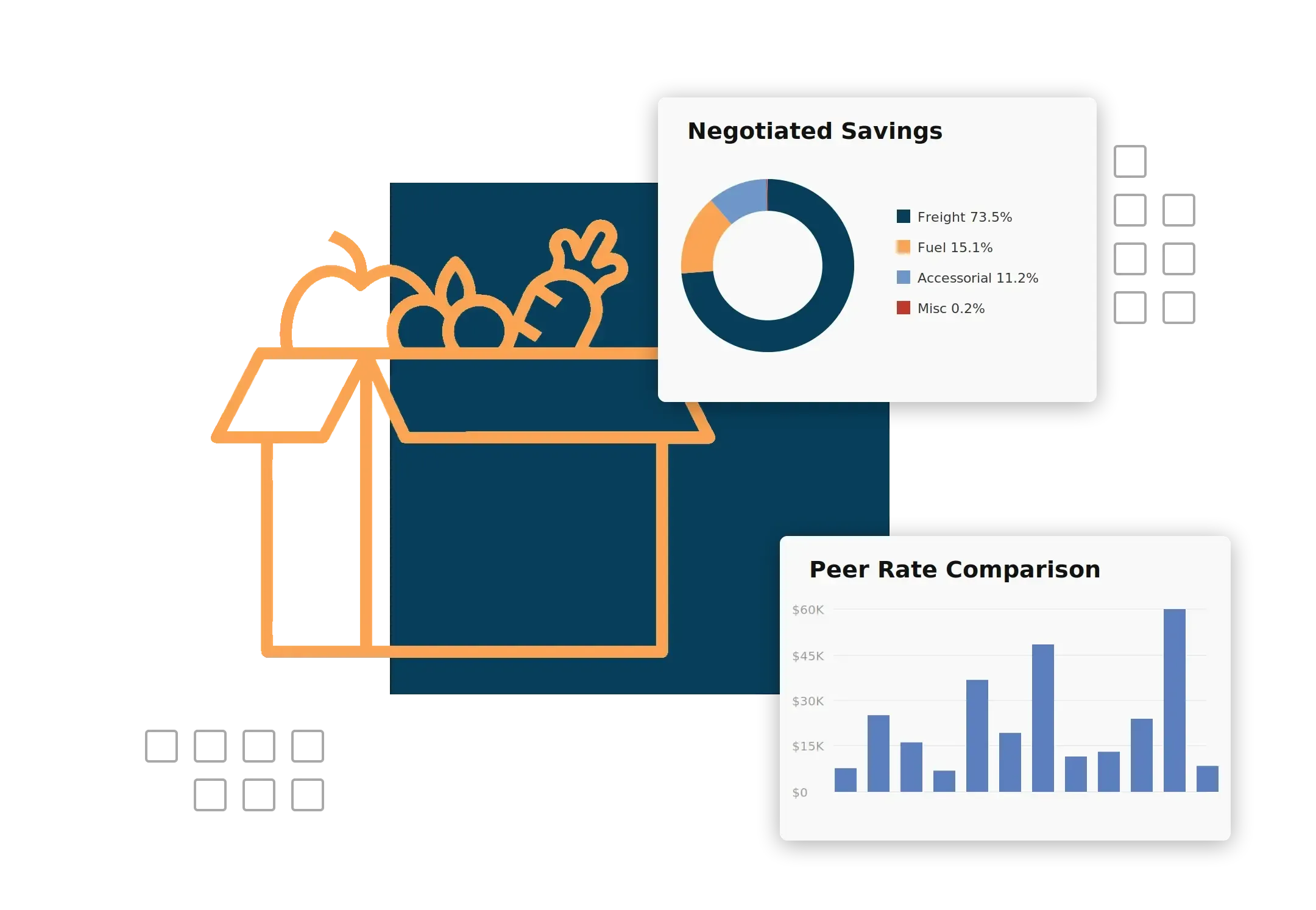
Most F&B Companies Negotiate Without the Data Their Carriers Use.
ShipSigma's freight experts and AI, trained on 20 billion live datapoints, show you exactly what comparable F&B shippers are actually paying. Three things your carrier is counting on you not knowing:
- What your carrier's account manager never volunteers
- The cold chain premium most F&B companies don't know is negotiable
- How ShipSigma closes the gap carriers depend on
INVOICE AUDIT & RECOVERY
Carrier Billing Errors Are Costing You Money
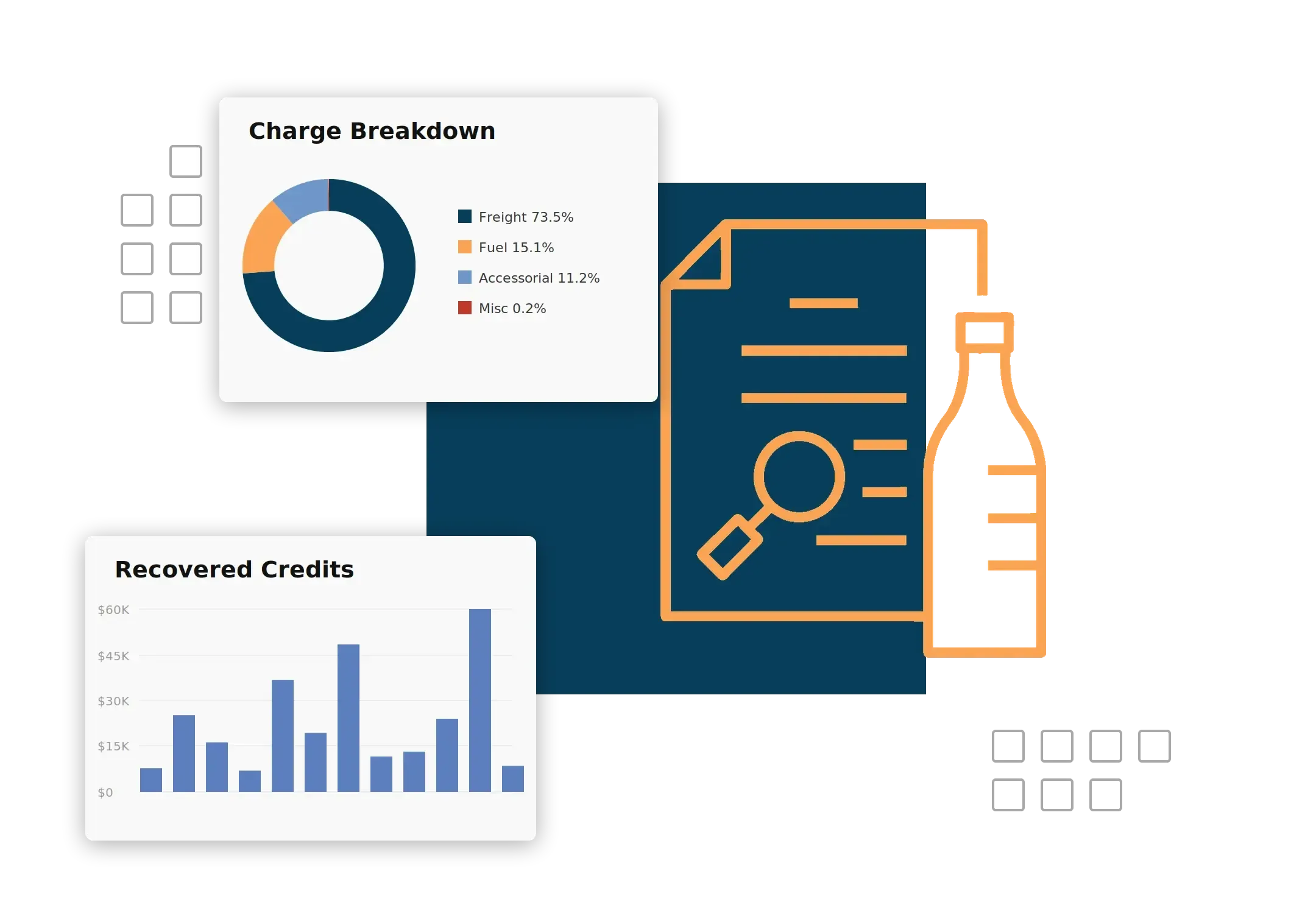
High shipment volumes and cold chain accessorials create consistent billing discrepancies that most F&B companies never catch. ShipSigma monitors every invoice, every week. What most F&B finance teams find out too late:
- The invoice line items carriers get wrong most in F&B
- Why most overcharges go unrecovered without monitoring
- What $70,000 recovered in a month does to your P&L
LTL & OPTIMIZED FREIGHT
Most Freight Programs Cover One Mode. Yours Should Cover Both.
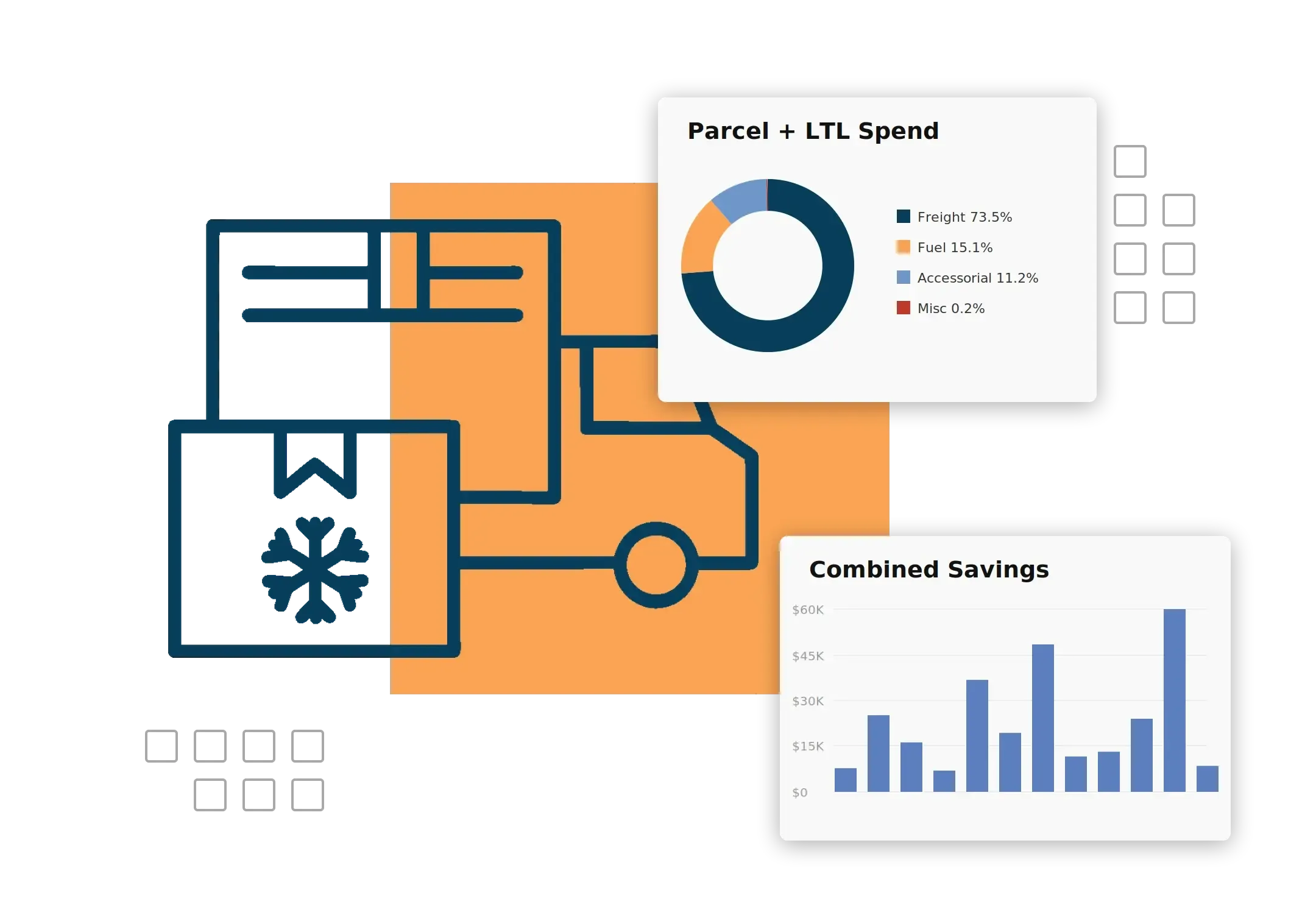
Food and beverage companies ship parcel and LTL, but most optimization efforts treat them separately. ShipSigma manages both from a single program. What's hiding in the gap between your two freight modes:
- The savings that disappear between parcel and LTL
- Why managing both modes separately costs more
- What a complete freight picture changes about negotiation
THE SHIPSIGMA GUARANTEE
No Carrier Changes. No Disruption. Savings Guaranteed Before You Sign.
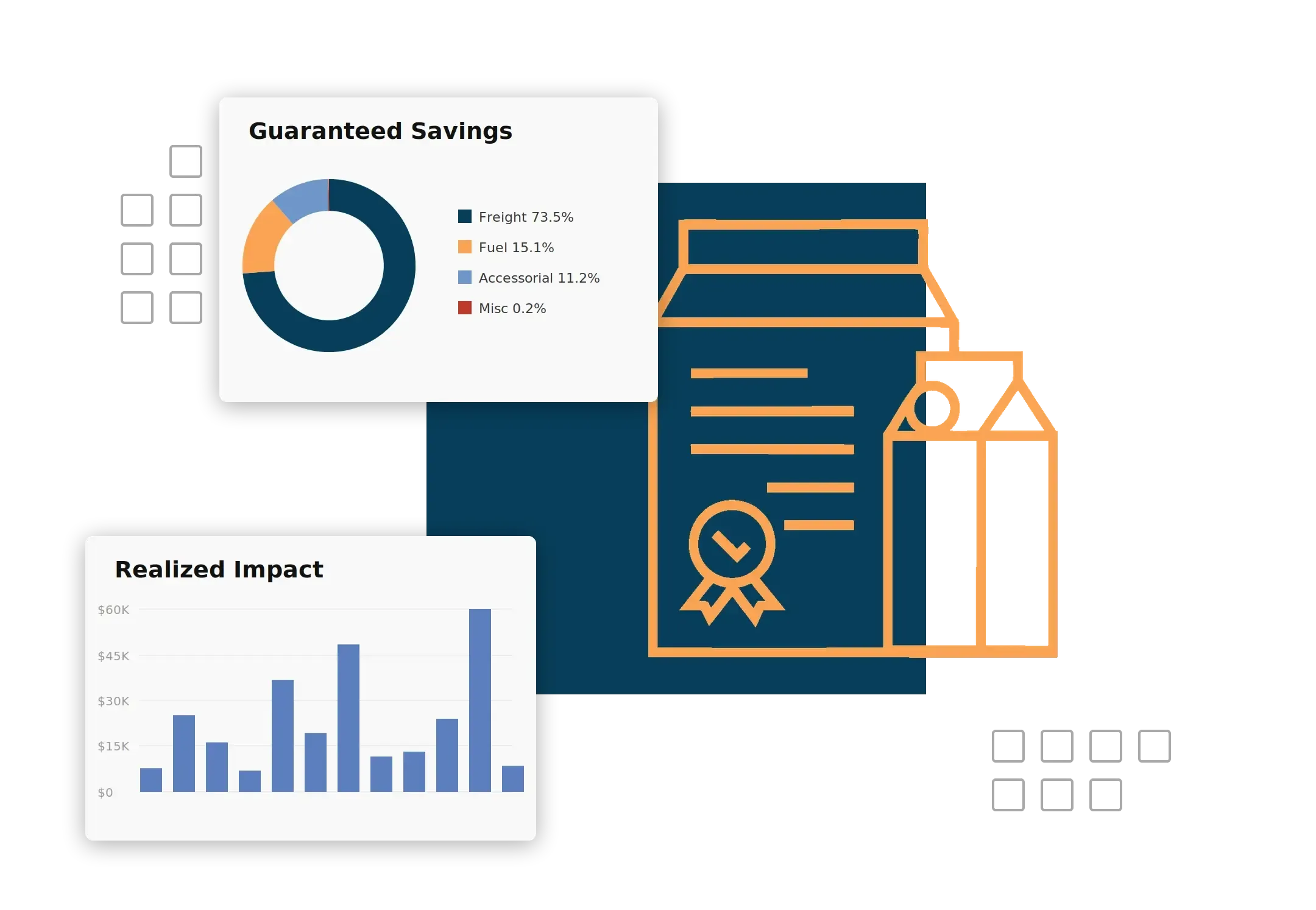
ShipSigma is compensated on savings delivered. Most F&B customers see EBITDA impact within 60 days with less than 5 hours of internal time invested. What first-time ShipSigma clients consistently don't see coming:
- Why your savings are guaranteed before you sign
- What less than 5 hours of your time actually gets you
- How one F&B VP saw $500K in savings before lunch
Your Carriers Know What You Should Be Paying. Let’s Find Out Together.
Most food and beverage companies don't know they're overpaying until an objective review proves it. ShipSigma analyzes your full shipping profile against over 20 billion live datapoints to show you exactly where savings are being left behind.
The analysis is free. The savings are guaranteed.
Average savings: 25% | Performance-based fees | Results typically visible within 60 days | No carrier changes required
Contact Form - Basic
Reducing Food & Beverage Shipping Costs Without Changing Carriers
Food and beverage companies operate on some of the tightest margins in commerce, and shipping costs have become one of the largest, most complex line items on the P&L. Between cold chain requirements, perishable goods urgency, unpredictable accessorial fees, LTL complexity, and carrier contracts that haven't been benchmarked against live market rates in years, most food and beverage shippers are leaving significant money on the table without realizing it. ShipSigma exists to recover it.
The True Cost of Shipping in Food & Beverage
Shipping costs in the food and beverage industry are rarely what they appear on the surface. The base rate is just the beginning. For manufacturers, distributors, CPG brands, and retailers spending anywhere from $100K to $100M+ annually on freight, the real cost is layered under billing errors, outdated contract terms, unclaimed refunds, and systemic inefficiencies that compound quarter after quarter.
Margin pressure is relentless. Retailers demand lower landed costs. Input costs fluctuate. And yet many logistics and supply chain teams are still operating with carrier contracts negotiated two or three years ago, contracts that no longer reflect current market rates, volume commitments, or the leverage the shipper actually holds. The result is overpayment that flows straight to the bottom line.
Accessorial fees are one of the most consistently overlooked cost drivers in food and beverage shipping. Residential delivery surcharges, fuel surcharge miscalculations, address correction fees, and delivery area surcharges can add 10–20% on top of base rates, and many of these charges are either applied in error or negotiable within carrier contracts. Without a systematic audit and contract management process, these fees go uncontested.
Dimensional weight pricing adds another layer of complexity, particularly for packaged food products where packaging design, box configurations, and pallet density directly impact billed weight versus actual weight. A single dimensional weight miscalculation, repeated across thousands of shipments, becomes a material cost issue. Add MABD (Must Arrive By Date) compliance penalties from major retail customers, and the true cost of shipping in food and beverage becomes a strategic financial problem, not just an operational one.
Did You Know? The average food and beverage shipper overpays by 15–30% due to carrier billing errors, outdated contract rates, and unclaimed refunds. ShipSigma's analysis of over $1 billion in live freight spend confirms this consistently across the industry.
Carrier Contract Optimization for Food & Beverage Shippers
Why Your Current Contract Is Probably Underperforming
Carrier contract optimization is the single highest-leverage activity available to food and beverage shippers, and the most commonly deferred. Most companies renegotiate carrier contracts only when a contract expires, which means they're perpetually behind the market. ShipSigma's freight rate benchmarking approach uses over $1 billion in live, anonymized market data to show food and beverage shippers exactly where their rates stand against the current market, not last year's market, and not a static benchmark database.
For food and beverage companies, carrier contract negotiation strategies must account for dynamics that don't apply in other industries. Cold chain carrier contract management requires specific service level agreements (SLAs) around temperature excursion liability, transit time guarantees for perishable goods, and carrier performance clauses that actually have teeth. Perishable goods freight contracts that lack enforceable temperature compliance terms expose shippers to both product loss and customer chargebacks that dwarf the original shipping cost.
Freight Rate Benchmarking and Renegotiation Cycles
The most effective food and beverage shippers don't wait for contract expiration to negotiate. They monitor their carrier performance data continuously and use freight market intelligence to identify negotiation windows: periods when capacity loosens, when carriers are growing their food vertical, or when competitive pressure makes incumbents more willing to move. ShipSigma's team triggers renegotiation cycles based on data signals, not calendar dates.
Carrier scorecards are a foundational tool in this process. A well-structured carrier scorecard for food and beverage logistics tracks on-time delivery by lane, claims rates, temperature compliance (for cold chain), damage rates, and billing accuracy. When scorecards reveal underperformance, they become powerful negotiating instruments. When they reveal strong performance, they support preferred carrier relationships that yield better rates, capacity priority, and flexibility during peak demand periods.
Seasonal Capacity and Accessorial Fee Management
Seasonal freight capacity in food and beverage is a recurring pressure point. Produce harvest seasons, holiday promotional surges, and weather-driven disruptions all tighten available capacity and drive accessorial fee spikes. Contracts that include seasonal capacity clauses and pre-negotiated peak surcharge caps protect shippers from absorbing costs that carriers treat as discretionary line items.
Accessorial fee management is an area where ShipSigma consistently finds untapped savings. Fuel surcharges indexed to outdated tables, arbitrary residential delivery fees on commercial shipments, and extended area surcharges applied outside their defined zones are all common. A properly negotiated carrier contract defines exactly which accessorial fees apply, under what conditions, and at what rate, and ShipSigma's team ensures that every clause is benchmarked before the ink dries. [Internal link: Carrier Contract Optimization Services]
Parcel Invoice Auditing: Recover What's Rightfully Yours
The Case for Automated Parcel Invoice Auditing
Manual parcel invoice auditing is slow, incomplete, and expensive. The volume of individual line items across FedEx and UPS invoices for a mid-sized food and beverage company can number in the tens of thousands per month, far beyond what any internal team can review with the depth required to catch every error. ShipSigma's automated parcel invoice auditing platform processes every shipment, every charge, every line item, applying rule-based logic and machine learning to flag discrepancies in real time.
Carrier billing error detection is not a niche problem. Studies consistently show that 1–3% of all parcel invoices contain errors, and in food and beverage (where accessorial fees are complex and shipment characteristics such as weight, dimensions, and temperature requirements create more billing variables) error rates often run higher. Shipping overcharge recovery in the food industry is an immediate, no-disruption source of cost reduction that requires zero operational change.
Common Billing Errors We Catch
ShipSigma's parcel invoice audit platform routinely identifies the following billing errors for food and beverage clients:
Duplicate charges: the same shipment billed twice across billing cycles
Incorrect dimensional weight calculations: billed DIM weight exceeds actual measured dimensions
Late delivery charges billed despite service failures: carriers charging full rates when guaranteed delivery windows were missed
Misapplied residential delivery surcharges: commercial addresses coded as residential in carrier systems
Incorrect fuel surcharge rates: surcharges applied using outdated index tables or wrong base rate tiers
Extended delivery area surcharges applied outside defined zones: zip codes incorrectly flagged as extended area
Address correction fees on correctly addressed shipments: carrier system errors triggering automated fees
Cold chain accessorial fees applied to non-temperature-sensitive shipments: particularly common in mixed-freight environments
For FedEx and UPS invoice audits in food and beverage specifically, late delivery refund recovery is often the largest single recovery category. Both carriers offer money-back guarantees on many service levels, but those refunds must be claimed within a specific window, and without automated tracking, they expire unclaimed. ShipSigma's platform files claims automatically, ensuring no refund goes unrealized.
The ROI of Parcel Invoice Auditing
Parcel audit ROI in food and beverage is measurable, fast, and consistent. ShipSigma clients typically see recovered overcharges within the first 30–60 days of engagement. More importantly, the audit data feeds directly into carrier contract renegotiation, creating a documented billing error history that supports rate concessions and contract corrections that prevent future overcharges from occurring in the first place. Auditing isn't just recovery. It's intelligence. [Internal link: Parcel Invoice Audit Services]
Shipping Intelligence: Data-Driven Decisions for Food & Beverage Logistics
Beyond Visibility: What True Supply Chain Intelligence Delivers
Real-time shipment visibility is table stakes in 2026. What food and beverage logistics leaders actually need is the layer above visibility: the ability to convert shipment data into decisions that reduce cost, improve service, and build competitive advantage. That's the function of a true supply chain intelligence platform, and it's what ShipSigma's proprietary cost modeling technology delivers.
Freight market intelligence for food and beverage encompasses carrier capacity trends by lane, rate volatility by mode, carrier performance benchmarks by service type, and predictive signals around accessorial fee changes and fuel surcharge movements. When a VP of Supply Chain or Logistics Director has access to this data in near real time, procurement decisions shift from reactive to strategic.
Predictive Analytics and Demand Forecasting
Predictive analytics in food and beverage supply chains addresses one of the most persistent cost drivers in the industry: the mismatch between shipping capacity commitments and actual demand. Over-committing to carrier minimums drives wasted spend. Under-committing triggers capacity shortfalls and expedited freight costs at premium rates. ShipSigma's demand forecasting models (built on historical shipment patterns, seasonal demand curves, and external market signals) help food and beverage companies right-size their carrier commitments before the shipping season begins.
AI-powered logistics tools embedded in ShipSigma's platform also flag anomalous carrier performance patterns before they become service failures. Carrier performance analytics that track on-time rates, claims frequency, and billing accuracy by lane give supply chain teams early warning signals, the same signals that inform carrier scorecard reviews and contract renegotiations.
KPIs Every Food & Beverage Shipper Should Track
ShipSigma's shipping intelligence framework monitors the KPIs that matter most for food and beverage logistics performance:
Cost per shipment by mode and lane (parcel, LTL, FTL, temperature-controlled)
Carrier on-time delivery rate (segmented by service level and geography)
Accessorial fee spend as a percentage of total freight cost
Billing accuracy rate by carrier
Claims rate and average claims value by carrier and product type
MABD compliance rate by retail customer and carrier
Cold chain temperature excursion incidents per 1,000 shipments
Refund recovery rate against total refund-eligible shipments
These metrics, tracked continuously and benchmarked against industry data, transform shipping from a cost center into a managed financial function. [Internal link: Shipping Intelligence Platform]
LTL & Freight Optimization for Food & Beverage
Making Smarter Mode Decisions
LTL shipping is the backbone of food and beverage distribution for mid-market manufacturers and distributors, but it's also one of the most cost-variable modes available. The decision between LTL and full truckload (FTL) isn't just about weight and volume; it involves transit time requirements for perishable goods, temperature control availability by carrier and lane, frequency of shipment, and the total landed cost impact on retail compliance.
Freight class for food and beverage products is another area where shippers consistently overpay. Incorrect freight class assignment (either through shipper error or carrier reclassification) can increase LTL rates by 20–40% on a single shipment. ShipSigma's freight optimization analysis includes a full freight class audit for all LTL-moving food and beverage SKUs, ensuring that density, stowability, handling, and liability characteristics are correctly documented and negotiated into carrier contracts.
Temperature-Controlled LTL and Cold Chain Optimization
Temperature-controlled LTL shipping for perishable goods operates under a different cost structure than standard LTL, and the gap between well-managed and poorly managed cold chain freight programs is substantial. Shippers who don't regularly benchmark their temperature-controlled LTL rates against current market data, or who haven't negotiated explicit cold chain SLAs with their carriers, routinely pay 15–25% more than necessary for equivalent service.
Cold chain logistics for food and beverage also introduces unique accessorial fee exposure: reefer fuel surcharges, pre-cooling charges, extended transit temperature liability fees, and others that vary significantly by carrier and season. Properly structured cold chain carrier contracts address each of these explicitly, with defined rate caps and dispute resolution procedures.
LTL Optimization Checklist for Food & Beverage Shippers
Verify freight class assignments for all LTL-moving SKUs against current NMFC guidelines
Benchmark current LTL rates by lane against live market data (not last year's bid)
Identify consolidation opportunities: are shipments going to the same destinations within 24–48 hours of each other?
Review MABD compliance history: are carrier service failures triggering retail chargebacks?
Audit temperature-controlled LTL accessorial fees for accuracy and contract alignment
Evaluate inbound freight optimization: are vendors shipping collect when prepaid would be cheaper?
Assess 3PL partnerships: are current 3PL arrangements delivering better rates than direct carrier relationships?
Review minimum charge thresholds: are small LTL shipments crossing into parcel economics?
MABD Compliance and Inbound Freight Optimization
MABD (Must Arrive By Date) shipping is a major financial exposure for food and beverage companies supplying large retail customers. Retailers including Walmart, Target, and major grocery chains levy significant non-compliance chargebacks (often 3% of invoice value) when shipments arrive outside the delivery window. The cost of a single MABD chargeback event can exceed the entire freight cost of the shipment.
ShipSigma's freight optimization work includes a full MABD compliance analysis, identifying which carrier-lane combinations are generating the most compliance risk, and restructuring routing guides and carrier SLAs to protect clients from chargeback exposure. Inbound freight optimization is the companion opportunity: for food manufacturers receiving raw materials and ingredients, converting vendor-collect freight programs to prepaid-and-bill arrangements under ShipSigma-negotiated rates often yields 8–15% savings on inbound freight alone. [Internal link: LTL & Freight Optimization Services]
The ShipSigma Guarantee
ShipSigma doesn't offer projections or estimates. We offer a guaranteed average 25% reduction in shipping costs, backed by contract, delivered without requiring food and beverage companies to change carriers, disrupt service levels, or dedicate significant internal resources to the process. Our model is designed for logistics leaders who need results, not another consulting engagement that consumes time without delivering measurable ROI.
That guarantee is made possible by ShipSigma's proprietary cost modeling technology, built on over $1 billion in live, continuously updated freight market data spanning parcel, LTL, FTL, and temperature-controlled shipping across all major carriers. When our team analyzes a food and beverage shipper's freight spend, we're not comparing it against industry averages from a static report. We're benchmarking every rate, every lane, every accessorial fee against what companies with comparable volume and characteristics are actually paying in the current market. The result is a negotiating position that carriers can't dismiss, and a savings realization that shows up in the first full billing cycle after implementation.
Frequently Asked Questions
How can food and beverage companies reduce shipping costs without disrupting operations?
The most effective path to shipping cost reduction for food and beverage companies doesn't require changing carriers, restructuring logistics networks, or investing in new technology platforms. It starts with two activities that require minimal operational disruption: carrier contract renegotiation using live market benchmarking data, and automated parcel invoice auditing to recover existing overcharges. Together, these two levers consistently deliver 20–30% cost reductions for ShipSigma clients, with savings flowing through within 60–90 days of engagement.
What is carrier contract optimization, and why does it matter for food and beverage shippers?
Carrier contract optimization is the process of systematically benchmarking your existing carrier rates, accessorial fees, and service terms against current market data, then renegotiating to align with what the market actually supports. For food and beverage shippers, this process must account for cold chain requirements, perishable goods SLAs, seasonal capacity clauses, and MABD compliance terms that don't exist in standard carrier agreements. Without regular benchmarking and renegotiation, contracts drift significantly above market over time.
How does parcel invoice auditing work, and what kinds of errors does it typically find?
Automated parcel invoice auditing works by processing every line item on every carrier invoice, comparing billed charges against contracted rates, shipment records, and carrier service guarantee terms. In food and beverage, the most common errors include duplicate charges, dimensional weight miscalculations, late delivery charges billed despite service failures, misapplied residential surcharges, and incorrect fuel surcharge rates. ShipSigma's platform files refund claims automatically, ensuring that time-sensitive money-back guarantee claims are never missed.
How do accessorial fees impact food and beverage shipping costs?
Accessorial fees can add 10–25% to base freight costs for food and beverage shippers, and a significant portion of those fees are either applied in error or negotiable within carrier contracts. Common accessorial fee issues include residential delivery surcharges on commercial addresses, extended area surcharges applied outside their defined geographic zones, and cold chain accessorial fees billed on non-temperature-sensitive shipments. Systematic accessorial fee auditing and proactive contract management are the two most reliable methods for controlling this cost.
What is MABD shipping, and how does it affect food and beverage freight costs?
MABD stands for Must Arrive By Date, a retail compliance requirement imposed by major grocery and mass-market retailers that specifies the window within which a shipment must be delivered to the distribution center. Non-compliance typically triggers a chargeback penalty of 2–3% of the invoice value, which can exceed the original freight cost. For food and beverage suppliers, MABD compliance is a direct financial exposure that requires careful carrier selection, lane-level performance tracking, and SLA terms in carrier contracts that establish accountability for service failures.
How does shipping intelligence help food and beverage companies make better logistics decisions?
A supply chain intelligence platform aggregates shipment data, carrier performance metrics, market rate trends, and billing accuracy data into a unified analytical environment. For food and beverage logistics leaders, this means the ability to identify underperforming carrier-lane combinations before they generate chargebacks, forecast freight spend with greater accuracy for budgeting purposes, and respond to freight market shifts proactively rather than reactively. ShipSigma's proprietary intelligence layer connects directly to the $1B+ market data set that powers our benchmarking and negotiation work.
How does LTL freight optimization benefit food and beverage distributors?
LTL freight optimization for food and beverage distributors typically delivers savings through four mechanisms: correcting freight class assignment errors that inflate LTL rates, identifying shipment consolidation opportunities that reduce total LTL moves, renegotiating LTL carrier rates using current market benchmarks, and restructuring inbound freight programs to capture savings on vendor-managed shipping. Collectively, these optimizations frequently reduce LTL freight costs by 15–25% without any changes to carrier relationships or service networks.
Does ShipSigma require food and beverage companies to switch carriers to achieve savings?
No. ShipSigma's entire model is built around delivering guaranteed savings within existing carrier relationships. We use live market data and contract benchmarking to renegotiate better terms with the carriers food and beverage companies are already using, so there is no disruption to established service networks, cold chain partnerships, or retail compliance relationships. For companies where carrier diversification does represent a savings opportunity, our analysis will identify it, but switching is never a requirement to achieve ShipSigma's guaranteed results.
Get Your Free Food & Beverage Shipping Analysis
ShipSigma has helped food and beverage companies recover millions in overpaid freight costs, and we can show you exactly where your opportunity is before you commit to anything. Our free shipping analysis delivers a clear, data-backed picture of where your carrier contracts stand against the current market, what your parcel invoice audit recovery potential looks like, and where LTL and freight optimization can move the needle on your total logistics spend.
There's no obligation, no disruption to your operations, and no requirement to change carriers. Just a precise, honest analysis of what you're paying versus what you should be paying, and a guaranteed path to close the gap.
[Book Your Free Shipping Analysis →]*