
Fragile Products. Time-Critical Delivery. Surcharges That Stop Climbing.
The wellness economy reached $6.8 trillion in 2024, yet rising logistics costs are compressing health and beauty margins faster than revenue is growing. Carriers attach temperature premiums, fragile-handling charges, and expedited-delivery fees that climb every year, and most brands absorb them for lack of a better reference point.
ShipSigma provides one. Our freight experts and AI, trained on over 20 billion live datapoints, show you exactly what comparable shippers are actually paying.

Trusted by Thousands. Saving Millions.









Why ShipSigma?
Scale, stated plainly.
Our proprietary cost modeling is built into an easy-to-use online platform that sets the industry standard for the small parcel market by providing advanced, enterprise-level solutions for all businesses.
0%
Average Shipper Savings
$0K+
Saved by One Shipper in Under 4 Hours
0 Days
Avg Time to EBITDA Impact
“We could not say enough good things about our relationship with ShipSigma. Beyond the initial savings, they continue to find us new angles for savings, set up dashboards specific to our needs, and meet with us quarterly to go through reporting/review savings/new opportunities. ShipSigma has been more than just a service for us, they have been a continuous partner as we navigate the difficulties of controlling our freight costs and holding the vendors accountable.”
“4 hours. It took less than 4 hours of my time for my company to see half a million in annual savings. No headaches, no feet-dragging negotiations, no confusing documents. It was so easy.”
“The insights and analytics, ShipSigma provided before and after negotiating our carrier agreements, make it clear we have a long-term partner who is aligned with our company values. The cost modeling and rate simulation let us know the exact savings we would see, down to the last cent. After running our historical data, ShipSigma was able to find us almost 28% in annual shipping savings with our same carrier.”
“Our team managed billions of dollars of various category spend. To have ShipSigma guarantee a savings and then fully execute so that we’re realizing increased EBITDA within 60 days allows us to focus on other strategic opportunities.”
“We thought we had the best rates. We were told we had the best rates. ShipSigma got us better rates. They found us nearly 25% in savings and helped us renegotiate our contract with our carrier. It was just so easy.”
“The parcel invoice audit was a lifesaver for us. The team at ShipSigma monitored the weekly audit and noticed that instead of shipping air, over 60% of our packages could have traveled ground with no delay in arrival. They saved us more money than we had ever saved in our manual audit process.”
CARRIER CONTRACT OPTIMIZATION
Your Health & Beauty Contract Has More Negotiable Line Items Than Your Carrier Admits.
Temperature-sensitive, fragile, and speed-critical shipments give carriers room to load a contract with handling and delivery charges procurement rarely thinks to question. Your carrier is counting on you to leave these alone:
- The handling fee your rep presents as non-negotiable
- The expedited-delivery premium that quietly resets higher every January
- The temperature surcharge you are likely still paying on shipments that no longer need it
INVOICE AUDIT & RECOVERY
Carrier Billing Errors Are Costing You Money
Temperature premiums, handling charges, and expedited fees make health and beauty invoices some of the easiest to bill wrong and the hardest to catch by hand. ShipSigma audits every invoice, every week. Where the recoverable money actually hides:
- The premium-service charges carriers misapply most on delicate freight
- The refund window that closes before a manual audit opens
- What one month of recovered claims adds back to your P&L
SHIPPING INTELLIGENCE & ADVISORY
The Costs That Creep In Between Negotiations
Carriers change pricing all year through rate increases, peak surcharges, and handling-rule updates. Temperature-sensitive and fragile freight absorbs more of it than most. ShipSigma watches every change and tells you what it means for your shipments. What most health and beauty teams find out about too late:
- The rate increase you could plan around instead of absorb
- The surcharge change your carrier hopes you miss
- What a quarterly review catches that an invoice never will
LTL & OPTIMIZED FREIGHT
Most Freight Programs Cover One Mode. Yours Should Cover Both.
Wellness and beauty programs move parcel and LTL, but most optimize one and leave the other alone. ShipSigma runs both from a single program. What you only see when both modes are run together:
- The savings that fall through when parcel and LTL are run apart
- The freight-class mistake that quietly inflates every LTL invoice
- What seeing both modes at once changes about your next negotiation
THE SHIPSIGMA GUARANTEE
No Carrier Changes. No Disruption. Savings Guaranteed Before You Sign.
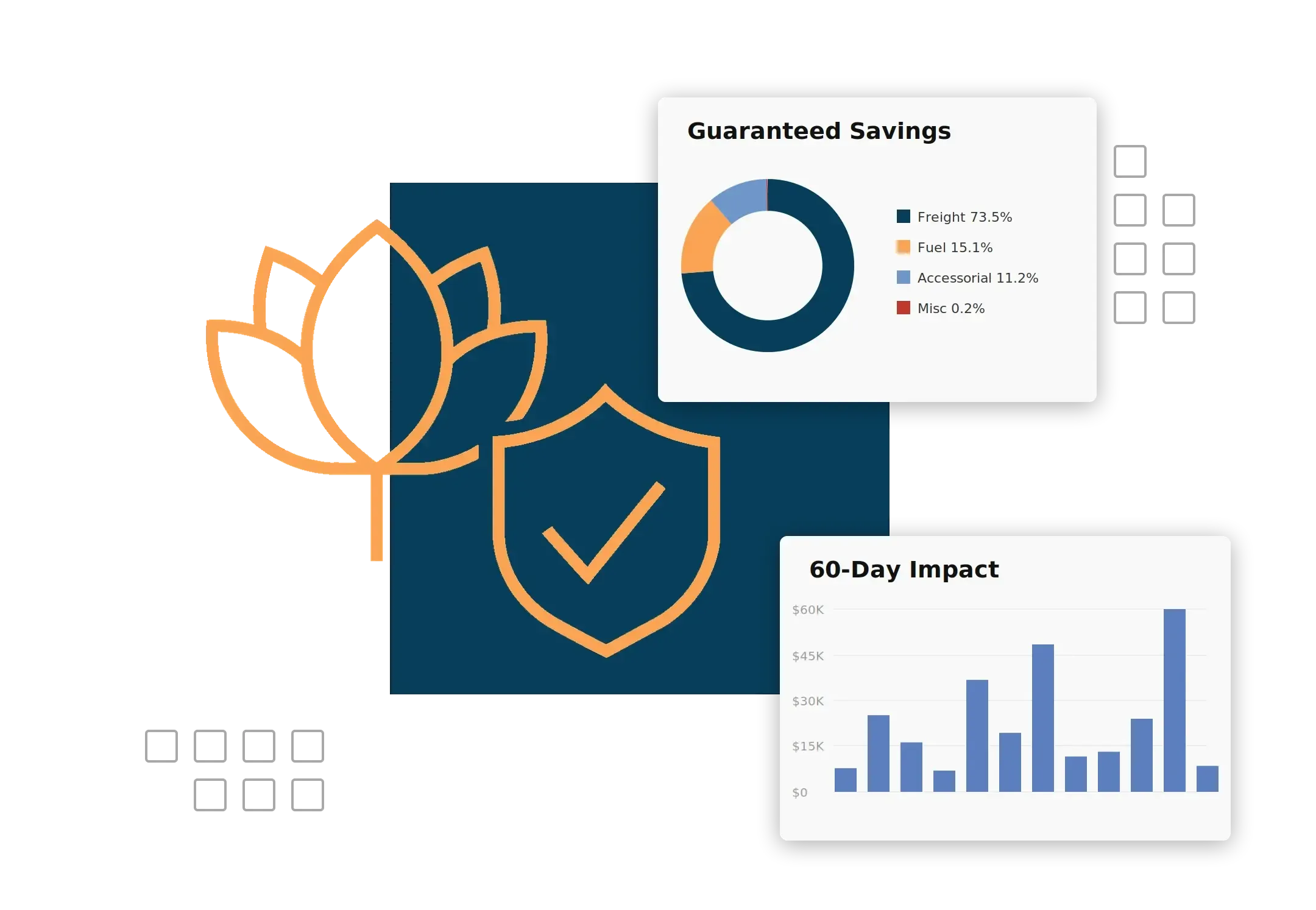
ShipSigma is compensated on savings delivered. Most health and beauty clients see EBITDA impact within 60 days. What first-timers do not see coming:
- The number you see before you sign anything
- How little of your team's time the whole process takes
- How one shipper saw $500K in savings before lunch
Your Carriers Know What You Should Be Paying. Let’s Find Out Together.
Most health and beauty companies don't know they're overpaying until an objective review proves it. ShipSigma analyzes your full shipping profile against over 20 billion live datapoints to show you exactly where savings are being left behind.
The analysis is free. The savings are guaranteed.
Average savings: 25% | Performance-based fees | Results typically visible within 60 days | No carrier changes required
Contact Form - Basic
Carrier Contract Negotiation for Health, Wellness, and Beauty Brands
Health, wellness, and beauty brands operate in a high-volume, complexity-rich shipping environment. Fragile products, time-critical delivery, high direct-to-consumer return rates, and seasonal spikes tied to launches and promotions generate accessorial fees and surcharges that climb every year, and most brands absorb them for lack of an independent reference for what comparable shippers pay.
Health wellness beauty carrier contract negotiation gives these brands a structured way to recover that spend without changing carriers or service levels. The pricing, discount tiers, and surcharge terms inside a carrier agreement shape every invoice for the life of the contract, and each one is negotiable.
What Is Carrier Contract Negotiation for Health, Wellness, and Beauty Brands?
Carrier contract negotiation is the process by which a brand formally reviews, challenges, and renegotiates the pricing, terms, and conditions in its agreements with UPS, FedEx, and regional carriers. A parcel contract negotiation covers base rates, discount tiers, minimum charges, dimensional weight pricing, accessorial fees, fuel surcharges, and service guarantees, and every one of those components is open to negotiation.
Health, wellness, and beauty brands carry uniquely complex shipping profiles. High order volumes, fragile or temperature-sensitive products, strict time-in-transit requirements, and demand spikes around product launches all shape how a carrier prices the account. A health wellness beauty carrier contract negotiation has to account for those drivers rather than accept a generic discount structure.
Negotiation is not a one-time event. A contract should evolve alongside a brand's shipping volume, product mix, carrier performance, and current market rates, which makes carrier relationship management an ongoing discipline rather than a renewal-cycle task.
Preparation is where the work begins. Before entering a negotiation, a brand gathers historical shipment data, identifies its true cost drivers, maps the gaps in its current contract, and aligns internal stakeholders on goals. Effective fee schedule negotiation starts with knowing your own numbers in detail.
Why Health, Wellness, and Beauty Companies Overpay on Shipping
Several structural factors make health, wellness, and beauty brands especially exposed to shipping overcharges. Diverse SKU catalogs, wide package-size variation, high return rates on direct-to-consumer beauty, and frequent surcharges tied to residential delivery, extended delivery areas, and oversized packages all push spend above what the base rate suggests.
Accessorials and surcharges are a large and growing share of total cost. On a representative residential ground shipment modeled at current rates, the fuel surcharge alone exceeded a fifth of the total invoice, and most of that cost fell on accessorials rather than the base rate, tracking the weekly on-highway diesel price index and the carriers' published weekly fuel surcharge tables. Without surcharge mitigation written into the agreement, those charges compound on every shipment.
Many brands renew without a line-by-line analysis, which leaves discount gaps, unfavorable tier thresholds, and punitive minimum charges in place. This is not a shipper failure. Carrier contracts are written to favor the carrier by default, using complex rate structures and language that obscures the true cost of service until the invoices arrive.
The same pattern holds for freight. Wellness manufacturers and distributors moving product by LTL face the same default-favoring structures, so LTL contract negotiation deserves the same scrutiny as a parcel contract negotiation. Even a well-priced agreement leaks money when carrier contract compliance is not enforced and negotiated terms are not applied correctly to every invoice.
The opportunity cost is real. Every dollar lost to avoidable shipping cost is a dollar that cannot go into product development, marketing, or fulfillment, which is why shipping cost optimization for health beauty brands belongs on the finance agenda, not just the operations one.
How Do You Negotiate a Carrier Contract in the Health and Beauty Industry?
The process runs end to end, and the discipline is what produces results that hold. It begins with a full audit of current carrier invoices and contract terms to establish a clear picture of actual versus contracted rates, so the negotiation starts from fact rather than assumption.
A carrier RFP, or request for proposal, is the formal mechanism for inviting competitive bids from multiple carriers. It creates negotiating room and lets a brand compare service levels, pricing structures, and contract flexibility side by side. Credible RFP activity also signals to an incumbent that volume is genuinely in play.
Strong carrier contract negotiation strategies are built on data. Shipping volume, lane density, and service-mix figures make a compelling case, because carriers respond to data that demonstrates stable, predictable volume and growth potential. Rate negotiation for health beauty shippers works best when the numbers, not the relationship, carry the argument.
Specific tactics map to the health and beauty profile. Brands can pursue lower residential surcharge rates for direct-to-consumer volume, dimensional weight divisor improvements for lightweight beauty products, and peak season surcharge caps that protect margin during high-volume promotional periods.
The final move is to negotiate future protections into the agreement. Rate cap provisions, guaranteed minimum discount floors, and service level commitments with financial remedies for missed transit times all preserve value over the term and keep carrier relationship management and fee schedule negotiation working in the brand's favor.
Key Contract Terms to Negotiate for Health and Wellness Shippers
The highest-impact terms cluster into a handful of categories, and a structured fee schedule negotiation addresses each one rather than fixating on the headline discount.
Base discount structures. Negotiate discounts by service type, weight break, and zone so the structure reflects the brand's actual profile rather than a generic tier.
Minimum charge thresholds. Minimum charges quietly reset the floor on every low-weight shipment, which matters for lightweight beauty parcels, and the threshold is negotiable.
Dimensional weight divisors. The divisor sets billable weight on lightweight, voluminous products. A more favorable divisor lowers billable weight across qualifying shipments.
Accessorial fee schedules. Residential, delivery area, and handling charges are defined in the UPS Rate and Service Guide and the equivalent FedEx schedules, and each is open to caps or reductions.
Fuel surcharge tables. The cap, the index table, and the adjustment frequency are all negotiable, which matters because the fuel surcharge applies on top of most accessorials, not the base rate alone.
Discount tiers reward attention. If a brand's volume sits just below a higher discount tier, negotiating the threshold down or the discount up at the current tier generates meaningful annual savings. Surcharge mitigation is one of the highest-impact opportunities available, particularly for brands with heavy residential volume, frequent extended-area deliveries, or products that trigger large package or oversize fees.
LTL contract negotiation carries its own terms for wellness manufacturers and distributors, including freight class assignments, minimum weight provisions, linear foot rules, and guaranteed transit options. Across both parcel and freight, carrier contract compliance language is what ensures the negotiated terms reach the invoice, with mechanisms to identify and recover billing errors when a carrier deviates from agreed pricing. Healthcare contract renewal terms deserve the same attention, since auto-renewal language without rate protection locks in carrier-set increases.
How Do You Leverage Data When Negotiating With a Shipping Carrier?
Data is the foundation of effective carrier contract negotiation. Brands that enter without granular shipment-level data are at a structural disadvantage to carriers, who hold full visibility into historical pricing, volume trends, and account profitability. The gap is structural to the category, not a reflection of any team's preparation.
The most valuable inputs are specific: shipment volume by service type and lane, average package weight and dimensions, residential versus commercial delivery mix, accessorial frequency and cost, and year-over-year spend trends. Together they define the profile a parcel contract negotiation has to reflect.
What-if simulations and cost modeling let a shipper evaluate the financial impact of proposed contract changes before agreeing to them, identifying which terms produce the greatest reduction across the brand's actual profile. AI-powered analytics trained on large volumes of parcel and LTL transactions, such as ShipSigma's platform built on over 20 billion datapoints, show where a current contract underperforms and what realistic improvement looks like at the brand's volume.
Data-backed positions protect a brand from carrier pushback. When proposed terms are grounded in documented shipping history and independent rate intelligence, a carrier finds it much harder to dismiss or deflect the request, and shipping cost optimization for health beauty becomes a negotiated outcome rather than a hope. Strong carrier contract negotiation strategies and steady rate negotiation for health beauty shippers depend on it, and they strengthen carrier relationship management rather than strain it.
What Are the Signs of a Bad Carrier Contract?
A few indicators reliably reveal that a carrier contract is underperforming for a health, wellness, or beauty brand. The clearest is an effective discount rate well below the published discount, the result of accessorial fees, minimum charges, or unfavorable dimensional weight rules eroding the headline number.
Surcharge exposure is the next warning sign. When accessorial fees represent a disproportionate share of total spend, particularly fuel, residential delivery, and extended delivery area charges, the contract likely lacks adequate surcharge mitigation provisions. A disciplined fee schedule negotiation closes that gap.
Contract language carries its own red flags: automatic renewal clauses with no rate protection, vague definitions of service failure, and the absence of any penalty when the carrier misses transit-time commitments. A contract signed two or more years ago can sit well behind both current market conditions and the brand's own improved volume and profile, which is a function of growth, not a negotiating mistake.
Billing errors complete the picture. Incorrectly applied surcharges, zone miscalculations, and duplicate charges routinely go undetected without systematic invoice auditing, compounding the cost of an already unfavorable agreement. Continuous carrier contract compliance monitoring is what catches them, and it protects the savings a parcel contract negotiation delivers and keeps shipping cost optimization for health beauty on track.
How Often Should Health and Wellness Carrier Contracts Be Renegotiated?
Carrier contracts should be formally reviewed at least once a year, with active renegotiation pursued whenever shipping volume, product mix, or carrier performance has changed materially since the last agreement. Waiting for the renewal date alone leaves value on the table in any parcel contract negotiation.
Specific business events should trigger an immediate review: rapid volume growth, new product categories with different shipping profiles, entry into new geographic markets, a carrier's announcement of a general rate increase, or performance failures that breach service level commitments. The 2026 general rate increase averaged 5.9% across UPS and FedEx, with several surcharges rising faster than that headline, as detailed in the carriers' 2026 rate changes.
Timing matters. Carriers are generally more receptive to favorable terms earlier in the calendar year, before peak season pricing pressure sets in, or when a brand can demonstrate credible carrier RFP activity that signals a willingness to move volume.
Complacency is the real risk. Brands that allow contracts to auto-renew without review are accepting carrier-imposed increases and forfeiting the chance to negotiate from a stronger position as volume grows, which is why healthcare contract renewal terms deserve a calendar of their own. Continuous contract management, where terms are monitored and optimized on an ongoing basis, keeps discount tiers, surcharge caps, and compliance provisions aligned with current activity and supports both carrier relationship management and shipping cost optimization for health beauty over time.
What Role Does a Shipping Partner Play in Carrier Contract Negotiation?
A shipping partner brings what most in-house logistics teams cannot replicate alone: market rate intelligence drawn from a large volume of comparable shipping transactions, established carrier relationships, and deep expertise in contract structure and negotiation strategy. That combination changes what a brand can ask for and defend.
ShipSigma functions as an extension of a brand's internal team. It pairs AI-powered analytics, built on over 20 billion parcel and LTL datapoints, with dedicated human advisors who understand the cost drivers and contract vulnerabilities most relevant to health, wellness, and beauty shippers. The carrier contract negotiation strategies that result are specific to the profile, not generic.
A full-service partner works across the entire contract lifecycle: contract analysis to find gaps in current terms, contract engineering to design improved structures, what-if simulations to model proposed changes, surcharge mitigation strategies, and ongoing compliance monitoring so negotiated terms are applied correctly. The same discipline extends to LTL contract negotiation and to the parcel contract negotiation and fee schedule negotiation that govern rates and accessorials.
Accountability is the difference that lasts. A results-driven partner stays engaged after the contract is signed, advising on surcharge adjustments, auditing invoices for billing errors, and flagging mid-cycle opportunities, which keeps carrier relationship management active all year rather than every few years.
The return case is straightforward. For health and beauty brands spending $500K to $100M annually on shipping, even a modest improvement in carrier contract terms translates to six- or seven-figure annual savings, which makes professional negotiation support a high-return decision rather than an added cost.
Stop Leaving Shipping Savings on the Table
Health, wellness, and beauty brands ship in a high-volume, complexity-rich environment where carrier contracts are rarely optimized by default. The gap between what a brand pays and what it should pay is substantial, and it is recoverable. Recognizing that gap is not an admission of a past mistake; it is the starting point for getting the contract current.
The path from problem to result is consistent. Effective health wellness beauty carrier contract negotiation rests on preparation grounded in shipment-level data, a clear view of the most negotiable terms in a parcel contract negotiation, disciplined surcharge mitigation, and ongoing carrier contract compliance monitoring. Together they turn shipping cost optimization for health beauty brands from an aspiration into negotiated savings that hold over time.
ShipSigma works alongside health, wellness, and beauty brands throughout the year, advising on the impact of every cost decision, audit, and surcharge adjustment, powered by AI built on over 20 billion parcel and LTL datapoints. Across more than 350 companies, that approach has delivered an average cost reduction of 25.2% and saved customers over $150 million, without a change of carrier or service level. It is the intelligence of a platform combined with the ongoing care of a dedicated partner.
Knowing the number before you negotiate is the advantage. A free, no-obligation shipping cost analysis puts a specific dollar figure on what your current agreement leaves recoverable, and ShipSigma guarantees the savings it identifies before you sign.
Frequently Asked Questions
What is an RFP in carrier contract negotiation?
A carrier RFP, or request for proposal, is a formal process for inviting competitive bids from multiple carriers. It lets a brand compare pricing structures, service levels, and contract flexibility side by side, and it creates negotiating room by signaling a credible willingness to move volume.
How does surcharge mitigation affect total shipping cost?
Accessorials and surcharges, including fuel, residential, and delivery area charges, can become a large share of total shipping spend, and the fuel surcharge applies on top of most accessorials rather than the base rate alone. Negotiating caps and reductions into the contract, then enforcing them through compliance monitoring, is what keeps that share from compounding.
How do you prepare for a carrier contract negotiation in the health and beauty industry?
Preparation starts with gathering historical shipment data, identifying the true cost drivers, mapping the gaps in the current contract, and aligning internal stakeholders on goals. For health and beauty brands, particular attention goes to residential delivery mix, dimensional weight on lightweight products, and peak season volume patterns.
What is the best time of year to negotiate a shipping contract?
Carriers are generally more receptive earlier in the calendar year, before peak season pricing pressure sets in, or when a brand can show credible RFP activity. Beyond timing, any material change in volume, product mix, or carrier performance, or a general rate increase announcement, should trigger a review.
Does negotiating a better carrier contract require switching carriers?
No. Most savings are recovered within existing carrier relationships by renegotiating rates, discount tiers, and surcharge terms using market rate intelligence. A credible alternative creates negotiating room, but switching is not a requirement to improve the agreement.
Why does dimensional weight matter for lightweight beauty and wellness products?
Dimensional weight sets billable weight based on a package's size rather than its actual weight, so lightweight, voluminous beauty and wellness products are frequently billed on dimensions instead of scale weight. The dimensional weight divisor is negotiable, and a more favorable divisor lowers billable weight across qualifying shipments.
How much can health, wellness, and beauty brands save by negotiating their carrier contracts?
Savings depend on the gap between current terms and market-appropriate rates, but the potential is substantial. Across more than 350 companies, ShipSigma has delivered an average cost reduction of 25.2% and saved customers over $150 million, without requiring a change of carrier or service level.