
Bulky Shipments. Fragile Products. Freight Margins Protected All Year.
55% of home décor shoppers abandon their carts over high shipping costs, which makes freight a revenue problem and not just a margin one. Carriers add dimensional weight penalties on bulky items and surcharges that compound every year, and most companies absorb the increases because they have no better reference point.
ShipSigma provides one. Our freight experts and AI, trained on over 20 billion live datapoints, show you exactly what comparable shippers are actually paying.

Trusted by Thousands. Saving Millions.









Why ShipSigma?
Scale, stated plainly.
Our proprietary cost modeling is built into an easy-to-use online platform that sets the industry standard for the small parcel market by providing advanced, enterprise-level solutions for all businesses.
0%
Average Shipper Savings
$0K+
Saved by One Shipper in Under 4 Hours
0 Days
Avg Time to EBITDA Impact
“We could not say enough good things about our relationship with ShipSigma. Beyond the initial savings, they continue to find us new angles for savings, set up dashboards specific to our needs, and meet with us quarterly to go through reporting/review savings/new opportunities. ShipSigma has been more than just a service for us, they have been a continuous partner as we navigate the difficulties of controlling our freight costs and holding the vendors accountable.”
“4 hours. It took less than 4 hours of my time for my company to see half a million in annual savings. No headaches, no feet-dragging negotiations, no confusing documents. It was so easy.”
“The insights and analytics, ShipSigma provided before and after negotiating our carrier agreements, make it clear we have a long-term partner who is aligned with our company values. The cost modeling and rate simulation let us know the exact savings we would see, down to the last cent. After running our historical data, ShipSigma was able to find us almost 28% in annual shipping savings with our same carrier.”
“Our team managed billions of dollars of various category spend. To have ShipSigma guarantee a savings and then fully execute so that we’re realizing increased EBITDA within 60 days allows us to focus on other strategic opportunities.”
“We thought we had the best rates. We were told we had the best rates. ShipSigma got us better rates. They found us nearly 25% in savings and helped us renegotiate our contract with our carrier. It was just so easy.”
“The parcel invoice audit was a lifesaver for us. The team at ShipSigma monitored the weekly audit and noticed that instead of shipping air, over 60% of our packages could have traveled ground with no delay in arrival. They saved us more money than we had ever saved in our manual audit process.”
CARRIER CONTRACT OPTIMIZATION
Your Home Goods Contract Has More Negotiable Line Items Than Your Carrier Admits.
Bulky, fragile, residential-heavy freight gives carriers room to load a contract with charges procurement never thinks to question. Your carrier is counting on you to leave these alone:
- The oversized-item fee your rep treats as fixed
- The surcharge that quietly resets higher every January
- The residential charge you are likely paying on commercial addresses
INVOICE AUDIT & RECOVERY
Carrier Billing Errors Are Costing You Money
Oversized and fragile-handling accessorials make home goods invoices some of the easiest to bill wrong and the hardest to catch by hand. ShipSigma audits every invoice, every week. Where the recoverable money actually hides:
- The line items carriers misbill most on oversized freight
- The refund window that closes before a manual audit opens
- What one month of recovered claims adds back to your P&L
SHIPPING INTELLIGENCE & ADVISORY
The Costs That Creep In Between Negotiations
Carriers change pricing all year through rate increases, peak surcharges, and dimensional-weight rule updates. Home goods freight absorbs more of it than most. ShipSigma watches every change and tells you what it means for your lanes. What most home goods teams find out about too late:
- The rate increase you could plan around instead of absorb
- The surcharge change your carrier hopes you miss
- What a quarterly review catches that an invoice never will
LTL & OPTIMIZED FREIGHT
Most Freight Programs Cover One Mode. Yours Should Cover Both.
Furniture and bulky décor move parcel and LTL, but most programs optimize one and leave the other alone. ShipSigma runs both from a single program. What you only see when both modes are run together:
- The savings that fall through when parcel and LTL are run apart
- The freight-class mistake that quietly inflates every LTL invoice
- What seeing both modes at once changes about your next negotiation
THE SHIPSIGMA GUARANTEE
No Carrier Changes. No Disruption. Savings Guaranteed Before You Sign.
ShipSigma is compensated on savings delivered. Most home goods clients see EBITDA impact within 60 days. What first-timers do not see coming:
- The number you see before you sign anything
- How little of your team's time the whole process takes
- How one shipper saw $500K in savings before lunch
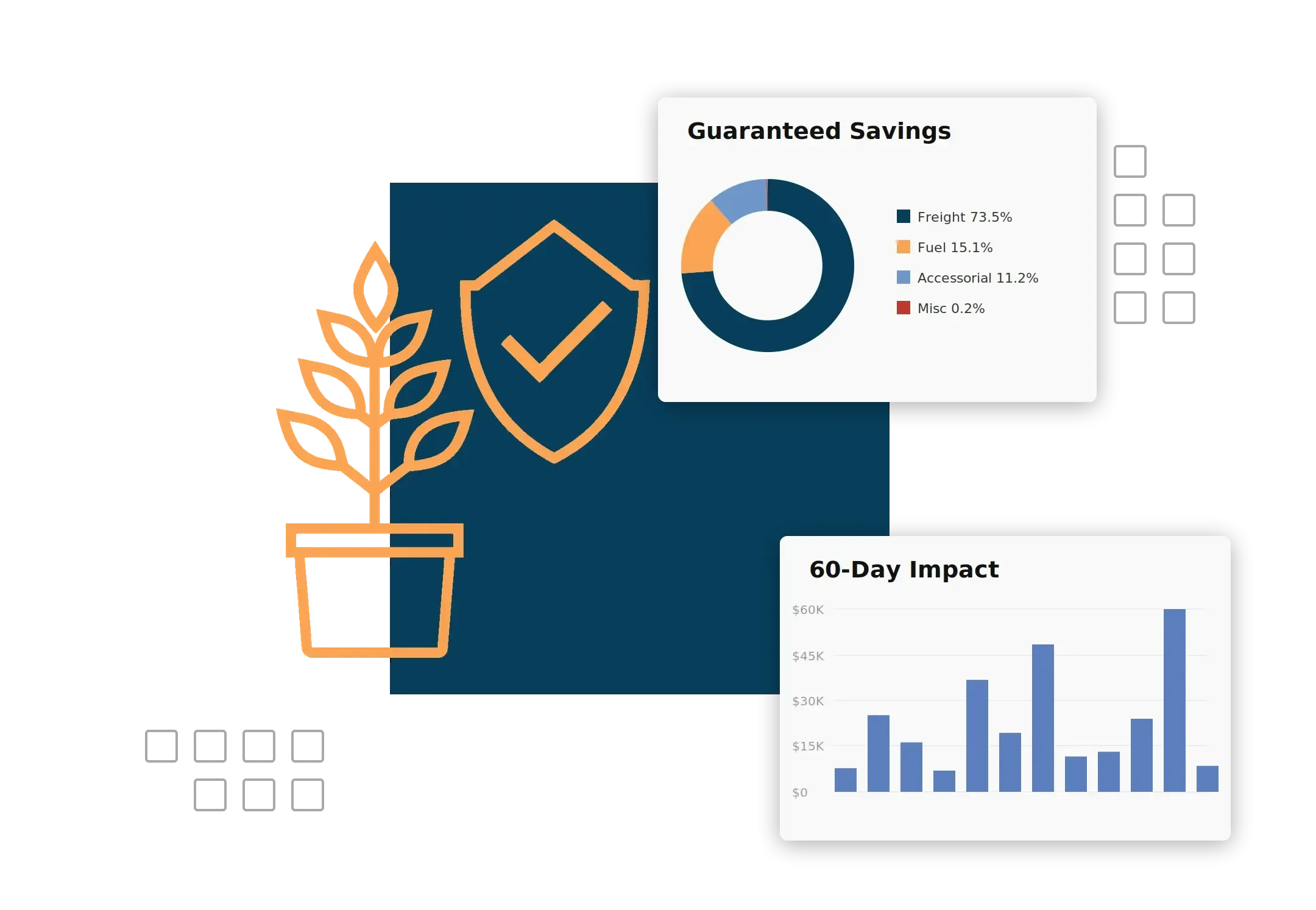
Your Carriers Know What You Should Be Paying. Let’s Find Out Together.
Most home goods companies don't know they're overpaying until an objective review proves it. ShipSigma analyzes your full shipping profile against over 20 billion live datapoints to show you exactly where savings are being left behind.
The analysis is free. The savings are guaranteed.
Average savings: 25% | Performance-based fees | Results typically visible within 60 days | No carrier changes required
Contact Form - Basic
Carrier Contract Negotiation for Home Goods and Décor Brands
Home goods and décor brands ship some of the most expensive freight profiles in commerce. Bulky, fragile, and residential-heavy shipments trigger dimensional weight charges, additional handling fees, and surcharges that compound every year, and most companies absorb the increases because they have no independent reference for what comparable shippers actually pay.
Carrier contract negotiation gives home goods and décor brands a structured way to recover that spend without changing carriers or service levels. A home decor shipping carrier contract is a negotiable document, and the rates, discounts, and surcharge terms inside it shape every invoice for the life of the agreement.
Why Carrier Contract Negotiation Matters for Home Goods and Décor Brands
Home goods and décor brands face a structurally expensive shipping environment. Large, bulky, and irregularly shaped products generate higher dimensional weight charges, residential delivery surcharges, and handling fees that compound quickly at scale. That cost concentration makes parcel spend management a financial priority, not an operational afterthought.
The economics differ from commodity shippers. A home decor brand ships a variable product mix, candles, mirrors, lighting, textiles, and furniture, across parcel and LTL modes. That complexity demands carrier rate negotiation tailored to the brand's specific cost drivers rather than a generic discount tier.
The information structure of the market is the deeper issue. Carriers price every home decor shipping carrier contract knowing what comparable shippers pay, while the brand across the table works from its own invoices and nothing else. That gap is structural to the category, not a reflection of any team's negotiating skill.
Carrier rate negotiation is not a one-time event. Annual general rate increases, shifting surcharge tables, and peak season pricing push a contract above market unless it is actively managed. Brands that treat the contract as a living document achieve consistent shipping cost reduction, and home decor freight rewards that discipline more than most categories because home furnishings freight costs carry heavier surcharge exposure per shipment.
Real room to negotiate exists. Volume commitments, mode mix, and a documented shipping profile give home goods and décor brands more negotiating room than they usually recognize, and home decor e-commerce shipping volume is concentrated enough to support meaningful concessions.
What Is Dimensional Weight Pricing and How Does It Affect Home Goods Shipping Costs?
Dimensional weight pricing, also called DIM weight, calculates a package's billable weight from its size rather than its actual weight. The carrier multiplies length by width by height, then divides by a published DIM divisor. For home decor products that are large and light relative to their volume, such as lampshades, wall art, and decorative vases, dimensional weight almost always exceeds actual weight and inflates parcel costs on nearly every shipment.
The DIM divisor is a number the carrier publishes and adjusts periodically, and even a small change moves billable weight on every dimensional shipment. The divisor is a negotiable element of a carrier contract. Shippers with the volume and the data to support the request can secure a more favorable divisor that lowers billable weight across qualifying shipments.
Bulky home goods freight also concentrates the largest accessorials. In early 2026, UPS and FedEx tightened the triggers: Additional Handling now applies to packages above 10,368 cubic inches, and the Large Package Surcharge applies above 17,280 cubic inches or 110 pounds. Both carriers also began rounding fractional inches up, which pulls more home furnishings freight into surcharge territory.
The dollars are significant. Dimension-based Additional Handling runs roughly $30 to $40 per package depending on zone, weight-based Additional Handling runs higher, and a Large Package Surcharge on a residential delivery to a far zone reaches up to $331, as published in the UPS Rate and Service Guide. For a brand shipping thousands of oversized parcels a month, these accessorials, not the base rate, drive home furnishings freight costs, and they are exactly what a disciplined carrier rate negotiation should target.
Reducing this exposure starts with a precise shipping profile that documents actual dimensions, weights, and volume by product category. Carriers respond to data, so presenting an accurate picture of dimensional weight exposure is foundational to negotiating dimensional weight pricing on parcel shipments and to broader shipping rate optimization within any parcel carrier contract negotiation, including the home decor e-commerce shipping lanes that carry the most DIM exposure.
What Items Can Be Negotiated in a UPS or FedEx Parcel Contract?
A UPS or FedEx contract negotiation covers far more than the headline discount. For home goods and décor brands, the negotiable terms that matter most map directly to the surcharges their freight triggers, and a structured shipping surcharge negotiation addresses each one explicitly.
Base rates and discounts. Negotiate discounts by service type, weight break, and zone so the structure reflects the brand's actual home decor shipping profile rather than a generic tier.
Fuel surcharge negotiation. The fuel surcharge is a percentage applied not only to the base rate but to most accessorials on the invoice, which is why it compounds so heavily on surcharge-laden home goods freight. Ground fuel surcharges have run in the high-20% range through 2026, tracking the weekly on-highway diesel price index and the carriers' published weekly fuel surcharge tables. The cap, the index table, and the adjustment frequency are all negotiable elements that a fuel surcharge negotiation with the carrier should target directly.
Peak surcharge discount negotiation. UPS and FedEx add peak surcharges during Q4, which falls squarely in the home decor industry's busiest selling season. Brands with predictable volume are positioned to negotiate peak surcharge caps, waivers, or reduced rates.
Delivery Area Surcharge (DAS) and Extended Delivery Area Surcharge (EDAS). These apply on deliveries to rural and remote ZIP codes. For 2026, the ground residential DAS is $6.55 and the extended ground residential rate is $8.85 per package. For a brand with a broad residential customer base, the residential delivery surcharge and DAS together are a significant cost driver, and both are negotiable.
General Rate Increase (GRI) negotiation. Both carriers applied a 5.9% average GRI for 2026, the third consecutive year at that headline figure, with several surcharges rising faster than the average, as detailed in the carriers' 2026 rate changes. GRI language in a contract can be negotiated to cap exposure on specific rate elements or to trigger a renegotiation right above a defined threshold.
Minimum volume commitments and incentive tiers. Thresholds tied to incentive discounts should reflect realistic seasonal swings, so a slow quarter does not claw back earned discounts retroactively.
The purpose of any shipping surcharge negotiation is to align each negotiable term with the brand's real cost drivers. That alignment separates a parcel carrier contract negotiation built on data from one built on the carrier's standard template.
What Are the Most Common Carrier Contract Clauses to Watch Out For?
Strong carrier contract negotiation strategies account for the structural clauses carriers write into standard agreements. These terms are standard carrier practice, not a shipper oversight, and the value in any UPS or FedEx contract negotiation comes from identifying and reshaping them before signing.
Early termination penalties. Many contracts impose a percentage of projected annual spend or a fixed fee for exiting before the term ends. Shorter initial terms with renewal options, or a limited penalty scope, protect a brand's flexibility.
Right of first refusal clauses. Some agreements require the shipper to let the incumbent match any competing proposal before moving volume, which constrains future negotiating room. Removing or narrowing this language preserves the brand's options.
RFP-prohibited clauses. Certain terms restrict a shipper's ability to run a formal carrier RFP during the term without penalty. Negotiating these out preserves the freedom to assess the market and protect ongoing parcel spend management.
Primary carrier designation requirements. Clauses that require designating a single primary carrier for specified services or volume limit strategic routing and reduce future negotiating room. Brands pursuing shipping rate optimization should resist exclusive or near-exclusive designations.
Vague or carrier-favorable surcharge language. Terms that let a carrier introduce new surcharges or modify existing tables without renegotiation are among the costliest to overlook. A home decor shipping carrier contract should define which surcharges are covered, capped, or subject to mutual agreement before any change takes effect.
How Can Data and Shipping Analytics Improve Carrier Contract Negotiations?
Effective carrier contract negotiation begins with a comprehensive shipping profile analysis: a detailed breakdown of shipment history by weight, zone, service type, surcharge category, and package dimensions. Without that data, a home goods brand is negotiating blind, unable to identify its true cost drivers or model the impact of potential contract changes.
Parcel invoice auditing is the foundational step that reveals what carriers are billing versus what the contract entitles the brand to receive. Billing errors, misapplied surcharges, and unclaimed service credits are common findings, and every dollar recovered improves the baseline a new negotiation starts from.
ShipSigma's proprietary cost modeling, built on over 20 billion live datapoints across parcel and LTL, lets home goods brands run scenarios before entering negotiations. A brand can quantify the savings impact of a DIM divisor improvement, a fuel surcharge cap, or a DAS reduction before making a single ask, which turns shipping data analytics negotiation from theory into a specific dollar figure.
Data-backed negotiation changes the dynamic. Instead of general requests for better rates, a brand that presents precise, analytically supported positions tied to its own shipping profile achieves stronger outcomes in carrier rate negotiation. The same analysis supports the carrier contract negotiation strategies that hold up across a multi-year term.
Ongoing analytics also enable contract compliance monitoring, verifying that the discounts, tiers, and surcharge concessions in the contract are applied correctly on every invoice. For home goods brands, where surcharge complexity is high and line items are numerous, continuous monitoring is the difference between negotiated savings on paper and parcel spend management that holds in practice, sustaining shipping rate optimization for the life of the agreement.
What Is the Best Strategy for Carrier Diversification in Home Goods E-Commerce?
Relying on a single national carrier is one of the most common and costly positions a home goods brand can hold. A multi-carrier shipping strategy distributes volume across carriers by destination zone, package characteristics, and cost per delivery, which reduces dependence on any one carrier and creates negotiating room for future cycles.
Regional carriers are a compelling option for home decor e-commerce shipping within specific geographic corridors. They frequently deliver at a lower cost per package with competitive transit times for Zones 1 through 4, and they impose fewer accessorial fees on the residential deliveries that dominate home goods volume.
Oversized and heavy home decor items, including furniture, large mirrors, rugs, and lighting fixtures, exceed parcel thresholds and move as freight. LTL carrier contract negotiation is a parallel discipline that applies the same data-driven approach to LTL rates, accessorial structures, and liability terms, and it has a direct effect on home furnishings freight costs.
A sound carrier diversification strategy segments shipments by product type, customer location, and delivery requirement, then routes each segment to the carrier that delivers the best combination of cost, reliability, and service for that profile. Diversification also strengthens the brand's position: when a home goods brand can credibly move volume to alternative carriers, including regional and LTL providers, incumbent national carriers are more motivated to offer concessions during a UPS or FedEx contract negotiation, which supports broader shipping rate optimization.
How Do You Negotiate a Carrier Contract for Home Goods Shipments?
A structured carrier contract negotiation follows a sequence. Each step builds the factual foundation for the next, and the discipline is what produces results that hold across the term.
Step 1: Audit current invoices and the existing contract. Run parcel invoice auditing to identify billing errors, misapplied surcharges, and gaps between contracted discounts and actual billing. Map every term in the existing agreement to understand what is in place and where the largest gaps sit relative to actual costs.
Step 2: Build the shipping profile. Compile 12 months of shipment data segmented by weight, zone, service type, package dimensions, and surcharge category. This shipping profile analysis becomes the factual basis for every ask, with particular attention to DIM exposure, DAS and EDAS zone distribution, and peak volume patterns.
Step 3: Model the costs and set target rates before negotiating. Use cost modeling to simulate the financial impact of specific changes: DIM divisor adjustments, fuel surcharge caps, peak surcharge waivers, and GRI protections. Knowing the savings potential before the first meeting grounds every position in fact rather than estimate.
Step 4: Segment the negotiation and start high. Prioritize the highest-impact items for the brand's specific profile and address them in a structured sequence rather than as one package. Open each position above the true target to create room for concessions that read as meaningful to the carrier.
Step 5: Use competitive alternatives to create room. A credible multi-carrier shipping strategy, including regional and LTL options, signals that volume is genuinely in play. Negotiating room is built through real alternatives and the data to prove the analysis was done.
Step 6: Engage an experienced negotiation partner. Carriers execute these negotiations hundreds of times a year, while a home goods brand renegotiates once every two to three years. A partner working year-round on carrier rate negotiation, with access to live market data across 20 billion datapoints, levels that asymmetry and consistently produces stronger outcomes than in-house negotiations conducted without comparative data.
Step 7: Monitor compliance and renegotiate proactively. Once the contract is in place, ongoing compliance monitoring confirms that every negotiated discount and concession is applied correctly on each invoice. Set a renegotiation calendar tied to renewal dates, GRI cycles, and material changes in volume or product mix.
Executed in this order, these carrier contract negotiation strategies turn a UPS or FedEx contract negotiation into a repeatable, data-led process rather than a periodic scramble, and they form the backbone of any parcel carrier contract negotiation for home goods shippers.
How Much Can Home Goods Brands Save by Negotiating Their Carrier Contracts?
The savings potential from a well-executed carrier contract negotiation is substantial. Across more than 350 companies, ShipSigma has delivered an average cost reduction of 25.2% and saved customers over $150 million, without requiring a change of carrier or service level.
The impact compounds because the savings are layered. Fuel surcharge concessions, peak surcharge reductions, DAS and EDAS adjustments, and improved dimensional weight pricing combine to deliver more than any single change on its own, and parcel spend management at this level flows straight to operating margin. A 20% reduction on $5 million in parcel spend frees $1 million for the business, with no offsetting investment and no operational change.
Parcel invoice auditing and ongoing compliance monitoring add a further layer of recovery that many brands leave on the table, recouping billing errors and missed credits that quietly erode the value of even a well-negotiated contract. For surcharge-heavy home decor profiles, these recoveries support the same shipping cost reduction that the negotiated rates deliver, and the carrier contract negotiation strategies and shipping rate optimization work reinforce each other over the contract term.
Knowing the number before you negotiate is the advantage. A free, no-obligation shipping cost analysis puts a specific dollar figure on what your current home goods contract leaves recoverable, and ShipSigma guarantees the savings it identifies before you sign.
Frequently Asked Questions
How do accessorial charges impact total parcel shipping spend for home goods brands?
Accessorials, not the base rate, drive most home goods parcel costs. Dimension-based Additional Handling runs roughly $30 to $40 per package by zone, and a Large Package Surcharge on a far-zone residential delivery reaches up to $331. Because the fuel surcharge applies on top of most accessorials, these charges compound on every bulky shipment.
How do fuel surcharges affect shipping costs for home goods businesses?
The fuel surcharge is a percentage applied to the base rate and to most accessorials on the invoice, so it compounds heavily on surcharge-laden home goods freight. Ground fuel surcharges have run in the high-20% range through 2026. The cap, the index table, and the adjustment frequency are all negotiable elements of a carrier contract.
What are peak surcharges, and how can shippers reduce them in a carrier contract?
Peak surcharges are fees UPS and FedEx add during high-demand periods such as Q4, which coincides with the home decor industry's busiest selling season. Brands with predictable volume are positioned to negotiate peak surcharge caps, waivers, or reduced rates as part of their contract terms.
What is a Delivery Area Surcharge (DAS), and can it be negotiated?
A Delivery Area Surcharge applies on deliveries to rural and remote ZIP codes. For 2026, the ground residential DAS is $6.55 and the extended ground residential rate is $8.85 per package. Both DAS and EDAS are negotiable, which matters for home goods brands with a broad residential customer base.
What is a general rate increase (GRI), and how does it affect carrier contracts?
A general rate increase is the annual rate adjustment both carriers apply across base rates, surcharges, and accessorials. The 2026 GRI averaged 5.9%, the third consecutive year at that headline, with several surcharges rising faster than the average. Contract language can cap GRI exposure on specific elements or trigger a renegotiation right above a defined threshold.
What negotiating power do home goods brands actually have with their carrier?
More than most brands recognize. Volume commitments, mode mix, and a documented shipping profile all create room to negotiate, and a credible multi-carrier option signals that volume is genuinely in play. The constraint is usually information, not negotiating skill, and a precise shipping profile closes that gap.
Should home goods shippers use UPS, FedEx, or regional carriers?
The strongest position segments volume by destination zone, package characteristics, and service requirement, then routes each segment to the best-fit carrier. Regional carriers frequently win on cost and residential accessorials for Zones 1 through 4, while national carriers and LTL providers cover broader zones and oversized freight. Diversification also creates negotiating room with incumbent carriers.