
UPS Contract Negotiation, Backed by Live Market Data
ShipSigma's cost modeling analyzes your actual shipping data and produces a guaranteed savings figure for your UPS agreement. You see the number first. You only pay if we deliver it.

Featured In









Cost Modeling Platform
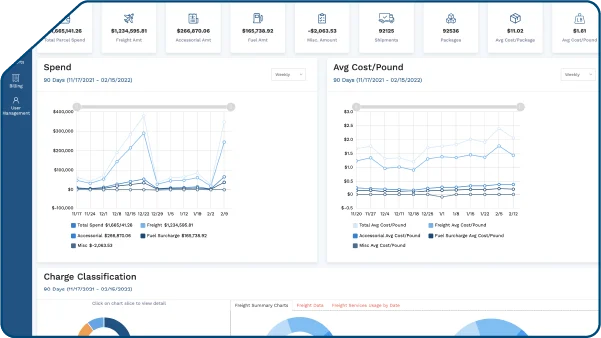
Our analysis pinpoints exactly where your UPS contract is overpaying, drawn from 20 billion live market data points.
- Live market rate intelligence
- Every negotiable lever including base rates, accessorials, dim factor, GRI caps, and rebate incentives
- Guaranteed savings
- Specific dollar figure before you sign
- Average 25.2% reduction across UPS engagements
- Same carrier
Lower Your UPS Costs with Contract Engineering
“We could not say enough good things about our relationship with ShipSigma. Beyond the initial savings, they continue to find us new angles for savings, set up dashboards specific to our needs, and meet with us quarterly to go through reporting/review savings/new opportunities. ShipSigma has been more than just a service for us, they have been a continuous partner as we navigate the difficulties of controlling our freight costs and holding the vendors accountable.”
“4 hours. It took less than 4 hours of my time for my company to see half a million in annual savings. No headaches, no feet-dragging negotiations, no confusing documents. It was so easy.”
“The insights and analytics, ShipSigma provided before and after negotiating our carrier agreements, make it clear we have a long-term partner who is aligned with our company values. The cost modeling and rate simulation let us know the exact savings we would see, down to the last cent. After running our historical data, ShipSigma was able to find us almost 28% in annual shipping savings with our same carrier.”
“Our team managed billions of dollars of various category spend. To have ShipSigma guarantee a savings and then fully execute so that we’re realizing increased EBITDA within 60 days allows us to focus on other strategic opportunities.”
“We thought we had the best rates. We were told we had the best rates. ShipSigma got us better rates. They found us nearly 25% in savings and helped us renegotiate our contract with our carrier. It was just so easy.”
“The parcel invoice audit was a lifesaver for us. The team at ShipSigma monitored the weekly audit and noticed that instead of shipping air, over 60% of our packages could have traveled ground with no delay in arrival. They saved us more money than we had ever saved in our manual audit process.”
UPS Contract Negotiation
Every UPS shipper negotiates contracts under the same condition: the shipper brings its own data, history, and volume, while UPS brings two decades of pricing intelligence aggregated across millions of shippers with no obligation to share what it knows. That asymmetry is structural. It sets a ceiling on what any internal team can independently verify about its own contract.
ShipSigma closes the asymmetry. Cost modeling trained on more than 20 billion parcel and LTL data points identifies where carrier margin is embedded in a given UPS pricing agreement and quantifies what is recoverable through structured negotiation. Every savings figure is presented before any commitment is signed. ShipSigma has served 350+ companies, delivered more than $150 million in customer savings, and produces a 25.2% average cost reduction across all engagements.
What is a UPS negotiated rate?
A UPS negotiated rate is a customized discount structure secured through a formal pricing agreement that replaces UPS's published list rates with lower, volume-adjusted pricing across specific service levels, zones, and package characteristics. UPS publishes standard list rates, commonly called retail or published rates, which any shipper pays without a contract. A negotiated agreement sits below those retail rates and reflects the shipper's profile and bargaining position.
The savings gap between retail rates and a strong negotiated rate is consistently meaningful. Businesses operating without an active contract, or accepting UPS's first written offer without structured pushback, carry effective rates well above what comparable shippers have secured. A structured UPS contract negotiation closes that gap through base rate discounts, accessorial concessions, and incentive programs that are not advertised and not automatic.
UPS does not publish a hard floor for contract eligibility. Shippers spending $50,000 or more annually on parcel generally have sufficient volume to negotiate a meaningful UPS pricing agreement. Companies in the $1 million to $100 million annual spend range, the segment ShipSigma serves, qualify for multi-tiered discount structures, rebate incentives, and service-level-specific rate reductions.
Two businesses with identical shipping volumes can carry materially different effective rates depending on how their UPS shipping contract was structured, what surcharges were addressed, and whether they negotiated proactively or accepted UPS's standard offer. The contract document is identical in format. The negotiated terms inside it, and the carrier margin those terms preserve, are not.
What are the most important items to negotiate in a UPS contract?
A UPS shipping contract is more than a base rate discount. The base rate discount is the most visible negotiation point and the most common starting point. Treating the base rate as the only negotiation point is one of the most costly mistakes in UPS shipper contract negotiation. A 40% base rate discount is fully eroded by uncapped surcharges, an unfavorable dim factor, and a high minimum charge structure.
Accessorial charges are where contracts are won or lost. Fuel surcharges, delivery area surcharges, residential surcharges, peak surcharges, address correction fees, and similar line items now represent a substantial share of total UPS spend for most shippers. Each of these is negotiable. Securing caps, flat-rate replacements, or percentage discounts on surcharges produces some of the highest-impact UPS shipping cost reduction in any contract optimization effort. These line items are routinely left unaddressed in initial draft contracts.
Dimensional weight pricing and minimum charges deserve direct attention. UPS dim factor negotiation determines how package size translates into billable weight. The standard dim divisor inflates the rated weight of lightweight, bulky packages. Negotiating a higher dim divisor or carve-outs for specific package profiles produces material savings. UPS minimum charge reduction is especially valuable for businesses shipping small, lightweight parcels.
UPS zone-based discounts reflect the distance a shipment travels. Shippers with concentrated short-zone volume have a different negotiating position than those with heavy long-zone volume. Zone-tiered discount structures align rates with where actual volume concentrates rather than applying a flat percentage that underperforms in the highest-volume zones. UPS service level discounts across Ground, 2-Day Air, Next Day Air, and SurePost should be negotiated individually rather than under a blanket reduction.
UPS revenue-based incentives are structured as quarterly or annual rebates tied to minimum spend thresholds. The terms surrounding qualification, exclusion categories, and payment timing require close review, since headline rebate percentages can be eroded by carve-outs that exclude meaningful portions of total spend. Payment terms, auto-renewal provisions, and UPS termination clause language are equally consequential. Favorable termination clauses preserve negotiating room for the next cycle. Unfavorable ones lock shippers into agreements long after market conditions or business needs have changed.
How do UPS accessorial charges affect my shipping costs?
UPS accessorial charges are the fastest-growing component of total carrier spend for most shippers. Over the past several years UPS has expanded its accessorial fee schedule, increased rates on existing categories, and introduced new surcharge types. For many shippers, accessorial charges represent a larger share of total UPS spend than the base transportation rate itself, which makes UPS surcharge negotiation one of the highest-return activities in any UPS contract optimization effort.
UPS fuel surcharge
The UPS fuel surcharge is recalculated weekly and applied as a percentage of the base rate. UPS publishes weekly fuel surcharge tables tied to the U.S. Energy Information Administration's weekly diesel fuel price index. Because the surcharge multiplies against the base rate, any reduction compounds in value as base rates rise. Shippers can negotiate a reduced fuel surcharge percentage, a fuel surcharge cap, or a fixed reduction relative to the published weekly rate. Each option produces ongoing UPS shipping cost reduction across every billing cycle.
UPS delivery area surcharge and residential delivery surcharge
The UPS delivery area surcharge applies to shipments destined for ZIP codes UPS designates as remote or difficult to service, a list that expands regularly. The UPS residential delivery surcharge applies to any delivery made to a non-commercial address. Both are negotiable. Businesses with high residential or rural delivery volume should prioritize these in contract discussions. A cap, a flat discount, or a waiver for specific ZIP code tiers produces meaningful annual savings for shippers with high residential or rural volume.
UPS peak surcharge
UPS peak surcharges are applied during the high-volume October-through-January window and have increased substantially in both magnitude and duration over recent years. Unlike base rate discounts, peak surcharges are excluded from standard contract language unless explicitly negotiated. Retail, e-commerce, and seasonal manufacturing operations should secure peak surcharge caps or discounts directly in the UPS carrier contract, not in side communications.
Audit as the second layer of surcharge defense
Even with favorable contract terms, surcharge billing errors occur. UPS invoice audit programs surface misapplied delivery area classifications, incorrect residential designations, and duplicate accessorial charges across every invoice cycle. Combining surcharge negotiation with systematic invoice auditing ensures that contracted rates are honored and that hidden fees do not erode negotiated savings over time.
What is the UPS general rate increase and how does it impact my contract?
The UPS general rate increase, or GRI, is the annual rate adjustment UPS announces and applies to its published rates each year, with effective dates falling in late December or early January. UPS announced a 5.9% general rate increase effective December 22, 2025, per its published shipping costs and rates page. The headline 5.9% understates the actual cost impact once new dimensional rules, surcharge adjustments, and minimum charge increases are factored in. Category-level cost increases reach 8% to 9% and higher in 2026.
The GRI is an annual certainty. Its impact on any individual contract is not. Shippers without explicit GRI protections in their UPS shipping contract absorb the full annual rate increase on base rates and surcharges simultaneously. Shippers who negotiated cap language at signing absorb only the contracted portion.
UPS base rate cap protections
A UPS base rate cap is a contractual provision that limits how much UPS can increase a shipper's negotiated base rates in any given year, independent of the published GRI. Cap language at 3.5% on annual base rate increases protects against the published GRI when it runs higher. Across a three-to-five-year contract term, the compounding difference between a capped and uncapped rate structure represents hundreds of thousands of dollars in cumulative UPS shipping spend.
Surcharge escalation requires separate language
The GRI applies to base transportation rates and to accessorial fees. UPS increases surcharges independently and at times more aggressively than base rates. A comprehensive UPS contract should include explicit provisions, separate from base rate caps, that govern how surcharges escalate annually. Without that language, a capped base rate is offset by uncapped surcharge growth.
Annual review as financial discipline
UPS updates rate schedules, surcharge structures, and incentive programs each year. A UPS contract that was strong at signing drifts out of market alignment within 12 to 18 months. Parcel spend management practice calls for a formal annual contract review covering effective rate trends, GRI impact, surcharge changes, and volume trajectory. The review determines whether renegotiation, amendment, or competitive bidding is warranted.
How do I build a shipping profile to negotiate better UPS rates?
A shipping profile is the factual foundation of every UPS contract negotiation. Before substantive negotiation begins, shippers need a precise, data-driven picture of their shipping activity. A UPS shipping profile analysis captures shipment volume by service level, average package weight and dimensions, zone distribution, delivery type, accessorial frequency, and seasonal patterns. Without that data, shippers negotiate blind and accept terms that do not reflect the actual cost drivers in their business.
Zone distribution shapes discount structure
UPS zone-based discounts apply different percentage reductions based on how far shipments travel within Zones 2 through 8. A shipper with heavy Zone 2-4 volume has a different negotiating position than one with predominantly Zone 6-8 volume. Understanding zone distribution allows the contract to specify a zone-tiered discount structure that reflects where actual cost concentrates, rather than accepting a flat percentage that underperforms in the highest-volume zones.
Dimensional weight pricing as a hidden cost driver
UPS dimensional weight pricing calculates billable weight as package volume divided by a dim divisor. The standard dim divisor for domestic ground is 139. For lightweight, bulky packages, the dimensional weight exceeds actual weight and becomes the billed weight. UPS dim factor negotiation, including a higher divisor, package-type carve-outs, or dimensional weight minimums, materially reduces rated weight across a large portion of total volume for many shippers.
Service level mix determines where discounts have the highest value
A shipper routing 80% of volume through UPS Ground has different optimization opportunities than one with significant 2-Day Air or Next Day Air volume. UPS service level discounts should be calibrated to actual service mix, with the deepest discounts applied where volume is highest and cost-per-package is greatest. Shipping profile analysis is what makes this precision targeting defensible inside a negotiation.
Documented shipping profiles produce documented results
UPS account managers respond to volume commitment data. A well-organized shipping profile demonstrating current spend, projected growth, and concentration across UPS services provides the factual basis for requesting deeper UPS volume discounts, expanded accessorial concessions, and structured rebate incentive tiers. Shippers who arrive at negotiations with clean, detailed data consistently achieve better outcomes than those presenting estimates or historical summaries alone.
How do I use a competitive RFP to get better UPS shipping rates?
A competitive RFP changes the negotiating dynamic. Issuing a UPS RFP, a formal request for proposal that invites UPS, FedEx, and where appropriate regional carriers to bid on the business, signals that volume is not automatically retained. This single action is among the most effective tools in UPS contract negotiation because it introduces real competitive pressure and forces UPS to present aggressive pricing rather than its standard offer.
FedEx as a credible counterpart
UPS and FedEx closely monitor each other's positioning and are sensitive to losing large shipper accounts to the other. A documented, credible FedEx competitive bid built on actual shipping data, not a generic rate card, creates real pressure inside UPS contract negotiation. Shippers who engage the UPS FedEx contract negotiation dynamic strategically consistently outperform those who negotiate with UPS alone.
Structuring the RFP for maximum impact
An effective UPS RFP does more than ask carriers to quote rates. The RFP presents a detailed shipping profile, specifies the contract terms being sought (including surcharge treatment, GRI protections, and rebate structures), establishes an evaluation timeline, and makes clear that award decisions are based on total cost of ownership rather than headline base rate discounts. That structure signals sophistication and prevents carriers from winning on visible discounts while burying costs elsewhere.
Multi-carrier strategy as ongoing pressure
UPS contract optimization is not a one-time event. Shippers who maintain active relationships with multiple carriers, using regional carriers for short-zone volume, FedEx for specific service lanes, and UPS for others, sustain negotiating pressure throughout the contract term. UPS account managers respond more readily to renegotiation requests from shippers who demonstrably use alternatives than from those committed to a single-carrier model.
Engaging the UPS account manager
UPS account managers operate within internal pricing authority limits. When shippers present a well-documented competitive bid and a clear shipping profile, account managers can escalate requests to UPS pricing teams for deeper concessions than what is available at the account level. Understanding this internal dynamic, and preparing materials that support an internal escalation case, is a key element of effective UPS account manager negotiation.
When is the best time to renegotiate a UPS shipping contract?
The best time to renegotiate a UPS shipping contract is before it auto-renews. Most UPS shipping contracts include auto-renewal provisions that lock terms forward unless the shipper provides written notice within a specified window, frequently 60 to 90 days before the renewal date. Missing that window is one of the most common and most costly contract management failures among mid-to-large shippers. Proactive UPS contract review on a formal annual calendar, not only at expiration, is the foundational discipline of effective parcel spend management.
Trigger events that warrant immediate renegotiation
Several business changes warrant immediate UPS contract renegotiation regardless of where a shipper is in the contract term. A significant increase or decrease in shipping volume. A change in product mix affecting package dimensions or weight. Entry into new geographic markets. A shift toward residential delivery. A merger or acquisition that changes consolidated shipping spend. Each of these represents a change in the shipper's profile that the existing UPS pricing agreement no longer accurately reflects.
Right of first refusal clauses
A right of first refusal clause in a UPS carrier contract gives UPS the contractual right to match any competing offer before a shipper can move volume to another carrier. ROFR clauses are sometimes presented as shipper-friendly. They can effectively neutralize the competitive pressure that a market bid is meant to create. ROFR language deserves careful evaluation during contract review. Where possible, time-limited or volume-specific ROFR provisions are preferable to blanket rights.
Invoice auditing as continuous compliance monitoring
A UPS invoice audit does more than recover overbilling. Systematic auditing reveals whether UPS is applying contracted discounts correctly, whether surcharge categories are being billed as agreed, and whether address classifications are accurate. Shippers spending $500,000 or more annually on UPS regularly find billing discrepancies worth 1% to 3% of total spend through ongoing auditing. Those findings provide the factual basis for mid-term contract amendment requests when patterns emerge.
Termination clauses preserve future flexibility
UPS contract terms governing payment timing, dispute resolution, and early termination carry material financial consequences. Unfavorable termination clauses, particularly those requiring significant advance notice or imposing volume shortfall penalties, reduce the shipper's flexibility to respond to changing market conditions or carrier performance issues. Negotiating reasonable termination provisions at signing preserves the optionality that makes ongoing contract management effective.
Should I use a third-party shipping consultant to negotiate my UPS contract?
Information asymmetry is the structural challenge in UPS contract negotiation. UPS negotiates carrier contracts with thousands of shippers every year. Its account managers and pricing teams have current, granular data on what comparable shippers are paying across every service level, zone, and surcharge category. Most shippers negotiate contracts infrequently, once every two to four years, with limited visibility into whether the terms being offered match the market. That asymmetry is the primary reason UPS contract savings are consistently available for shippers who approach negotiation with comparable data.
What a qualified third-party partner contributes
An experienced shipping consultant or technology-driven contract negotiation partner contributes three things an internal team rarely replicates on its own. Live market data drawn from a broad population of actual shipper contracts. Deep familiarity with every negotiable element of a UPS carrier contract. Negotiating technique informed by carrier pricing dynamics rather than general procurement experience. Shippers who engage qualified third-party support consistently achieve better effective rates than those negotiating directly without comparable market intelligence.
AI-powered analysis and contract optimization
Modern parcel contract negotiation has moved beyond spreadsheet-based rate analysis. ShipSigma's platform applies AI-driven cost modeling to a shipper's full shipping profile, identifying where the current UPS pricing agreement underperforms relative to comparable shippers and quantifying the opportunity across every negotiable dimension. The platform is trained on more than 20 billion parcel and LTL data points. The level of precision available through this analysis is not achievable through manual methods.
The partner model matters as much as the platform
Technology alone does not produce savings. Effective UPS contract negotiation requires ongoing human expertise, advisors who interpret carrier pricing strategy, parse contract language, and advocate on a shipper's behalf throughout the entire contract term. ShipSigma pairs AI-driven market rate analysis with a team that brings more than 250 years of combined experience inside UPS and FedEx pricing, finance, and business development. The team works alongside clients on every cost decision, invoice audit, and surcharge adjustment throughout the year, ensuring that contracted savings are captured, sustained, and continuously improved.
The ROI of qualified third-party support
For businesses spending $1 million to $100 million annually on parcel shipping, the ROI calculation on qualified third-party UPS contract support is direct. ShipSigma delivers a 25.2% average cost reduction across all engagements, achieved through combined improvements to base rates, accessorial terms, GRI protections, and invoice accuracy. ShipSigma's savings guarantee removes the risk: if the modeled savings are not delivered, the client does not pay. The relevant question is not whether to seek expert support, but how to select a partner whose data depth and ongoing involvement match the complexity and scale of the shipping program.
ShipSigma offers a no-cost, no-obligation analysis of historical UPS shipping data and produces a guaranteed savings figure before any agreement is signed. Request a UPS contract analysis using the form on this page. The response returns within 48 hours.
Frequently Asked Questions
How much can businesses save by negotiating a UPS contract?
Savings vary by current contract structure, shipping volume, carrier mix, and surcharge profile. ShipSigma delivers a 25.2% average cost reduction across more than 350 client companies and over $150 million in customer savings to date. The savings outcome on any individual contract depends on the gap between the current pricing agreement and what is achievable for a shipper of the same profile in the current market.
What is a UPS base rate cap and how does it protect shippers?
A UPS base rate cap is a contractual provision that limits how much UPS can increase negotiated base rates in any given year, independent of the published general rate increase. A cap of 3.5% on annual base rate increases protects shippers from the full impact of GRIs that run higher. Across a multi-year contract, the compounding difference between capped and uncapped rates represents hundreds of thousands of dollars in cumulative spend.
What is dimensional weight pricing and how can I negotiate it with UPS?
UPS dimensional weight pricing calculates billable weight as package volume divided by a dim divisor, with 139 the standard divisor for domestic ground. For lightweight, bulky packages, the dimensional weight exceeds actual weight and becomes the billed weight. Negotiating a higher dim divisor, package-type carve-outs, or dimensional weight minimums reduces rated weight across the affected portion of a shipper's volume.
What is the right of first refusal clause in a UPS contract?
A right of first refusal clause gives UPS the contractual right to match any competing offer before a shipper can move volume to another carrier. ROFR clauses can neutralize the competitive pressure a market bid is meant to create. Time-limited or volume-specific ROFR provisions are preferable to blanket rights, and the language deserves careful evaluation during any contract review.
What are UPS revenue-based incentives and how do they work?
UPS revenue-based incentives are structured as quarterly or annual rebates tied to minimum spend thresholds. The terms surrounding qualification, exclusion categories, and payment timing require close review, since headline rebate percentages can be eroded by carve-outs that exclude meaningful portions of total spend.
How can I use FedEx as leverage when negotiating with UPS?
UPS and FedEx are highly attentive to losing large accounts to one another, which makes a credible FedEx bid one of the strongest assets a shipper can bring to a UPS negotiation. The bid must be built on the shipper's actual shipping data, not a generic rate card, and presented as a real alternative rather than a hypothetical. A documented competitive bid creates structural pressure inside the UPS contract negotiation that the standard offer would not.