Our AI-powered platform helps UPS and FedEx shippers save big by automatically recovering, claiming, and refunding fees from late shipments, invalid surcharges, lost & damaged packages, and more.

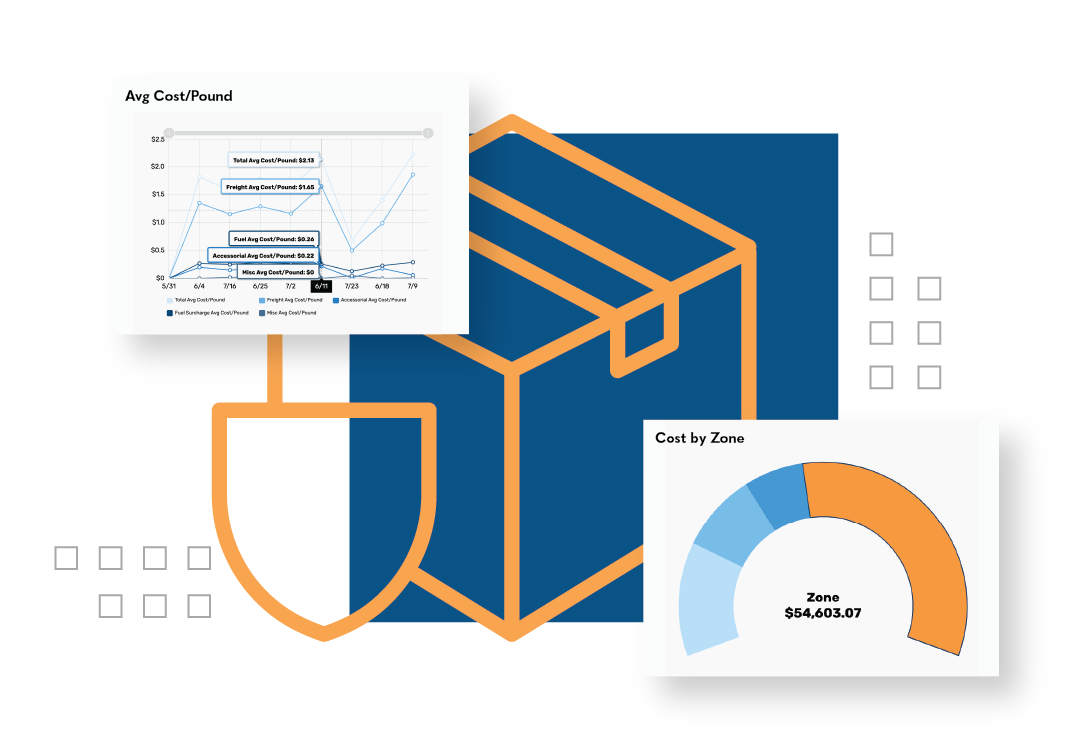

Our fully automated invoice auditing platform identifies, submits, and verifies claims on your behalf without you having to lift a finger.

Our ai-powered platform runs a weekly invoice audit identifying late shipments, invalid surcharges, lost/damaged packages, and more.

Every week, you'll receive a report identifying incidents of overcharging, errors, service failures, filed claims, and refunds within your agreement.
A parcel invoice audit is how high-volume shippers recover the revenue that carrier billing errors quietly remove from their P&L every week. UPS and FedEx process millions of line items per billing cycle, and a measurable percentage of those line items are billed incorrectly. Recovering the resulting credits is a discipline of speed and coverage, not opinion.
The pages below walk through what a parcel invoice audit is, the categories of carrier billing error that audits catch, how manual review compares to automated platforms, what parcel audit services actually do, and how to evaluate a parcel audit company against your shipping profile. ShipSigma's parcel invoice audit applies over 50 audit points to every UPS and FedEx invoice each week, files refund claims automatically, and verifies that recovered credits land against future invoices.
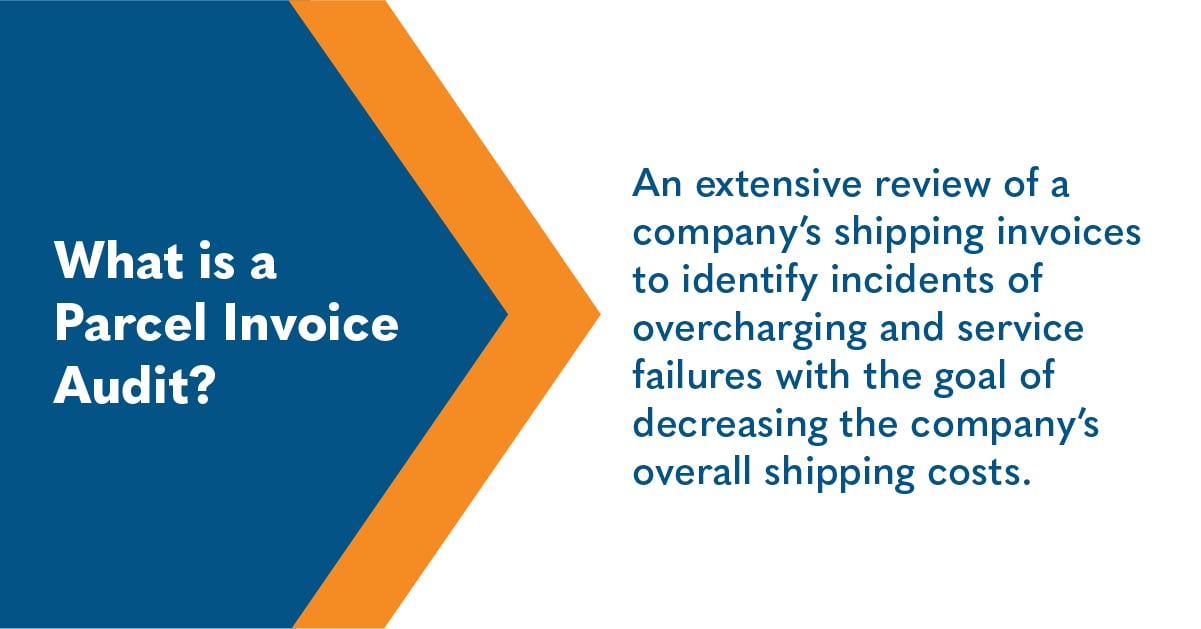
A parcel invoice audit is the systematic review of every line item on a carrier invoice against the shipper's contracted rates, the carrier's published surcharge schedules, and the actual characteristics of each shipment. The audit identifies billing errors, unauthorized fees, contractual violations, and service failures that produce recoverable refunds. For UPS and FedEx accounts, an audit covers late delivery refunds, dimensional weight discrepancies, duplicate charges, fuel surcharge errors, accessorial misapplications, and contract non-compliance.
Carrier invoices are dense by design. A single weekly billing file from UPS or FedEx can contain tens of thousands of line items spanning service levels, surcharge categories, and accessorial fees. Identifying every billable discrepancy requires cross-referencing each shipment's tracking data, dimensions, zone, and delivery status against what was actually billed. That cross-reference is the audit. Done well, it produces a complete picture of which charges are valid, which are recoverable, and which patterns are repeating across billing cycles.
For shippers spending $500,000 or more on parcel annually, even a small percentage of billing inaccuracies compounds into meaningful financial loss. A consistent parcel invoice audit process is a strategic cost-control function, not an optional one. ShipSigma's audit applies more than 50 distinct audit points to every invoice, a depth of coverage that produces credit recovery a checklist-based review will not surface.
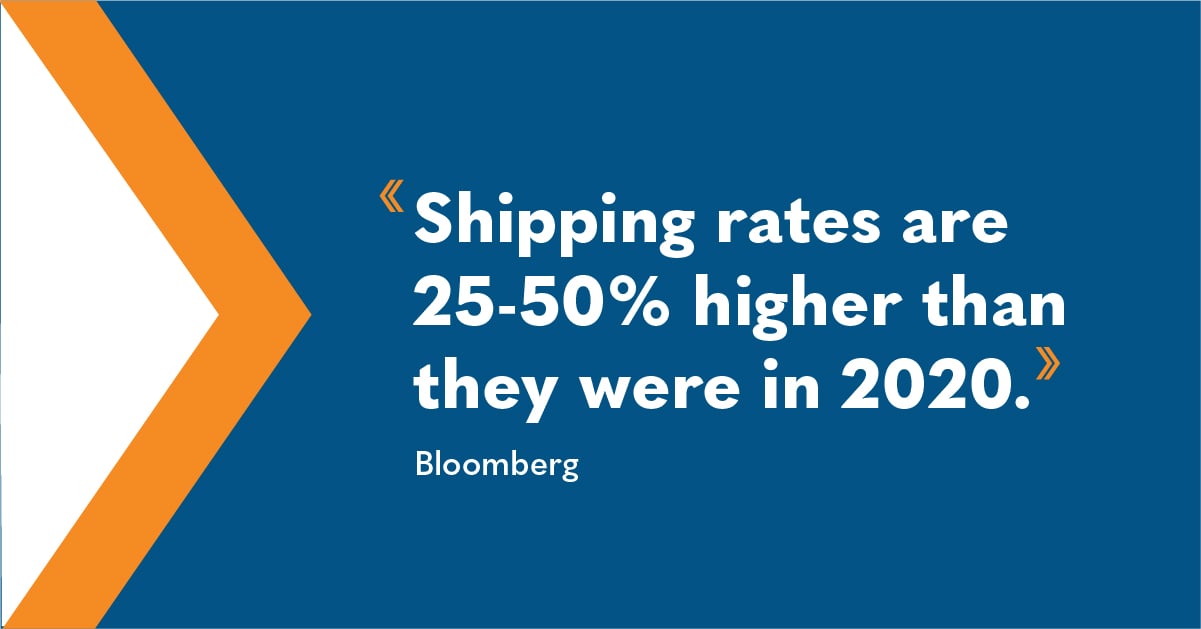
Carrier billing errors are more common than most shippers realize. Industry estimates place the share of parcel invoices containing at least one billable discrepancy in the low single digits, with the dollar value of those discrepancies typically representing 2 to 7 percent of annual shipping spend at high-volume shippers. The error rate is driven less by carrier intent than by the operational complexity of pricing millions of shipments daily against rate schedules that update annually and surcharge tables that update weekly.
The dollar value of each error has grown over the past several rate cycles. FedEx and UPS announced 5.9 percent average general rate increases for 2026, following the same 5.9 percent in 2024 and 2025 and a record 6.9 percent in 2023. Each surcharge category compounds those base rate moves, with additional handling, oversize, and delivery area surcharges rising at double-digit percentages year over year. A duplicate residential surcharge today carries materially more revenue impact than the same error five years ago.
Three error categories appear repeatedly across high-volume accounts: duplicate shipping charges generated by data entry or carrier system anomalies, weight and zone misclassifications that inflate billed weight or assign the wrong rate band, and late delivery fees applied to shipments that did not meet the carrier's service commitment. Carrier billing systems are automated, which means a systematic error can persist across multiple billing cycles undetected. The longer an account operates without an audit, the more recoverable credit slips past the filing window.
Weekly audit cadence is the operational answer. Carrier refund windows for guaranteed service failures and billing disputes are narrow, and a monthly or quarterly review will routinely miss the window for the oldest invoices in the batch. A weekly parcel invoice audit keeps every recoverable item inside the filing deadline.
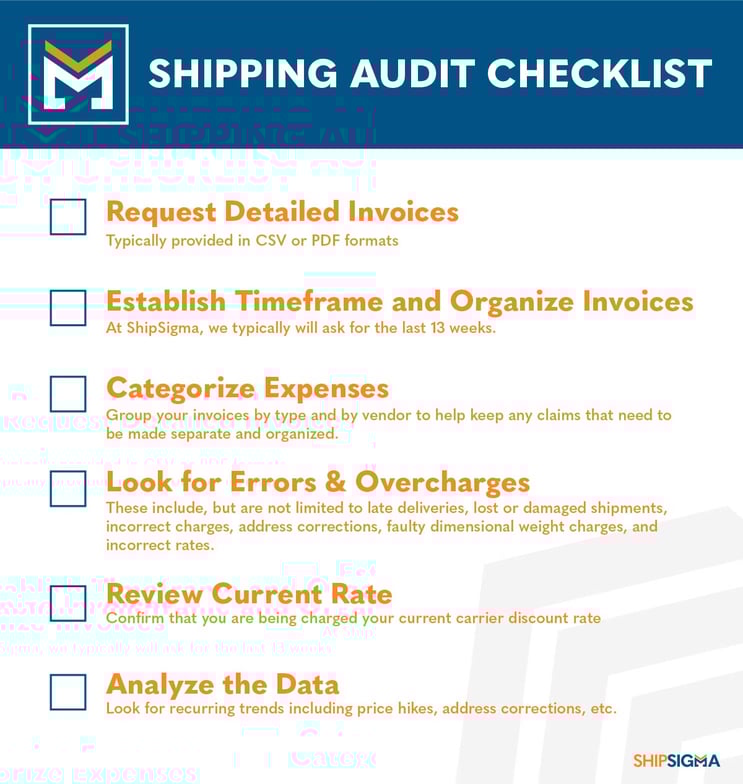
Six categories of carrier billing error account for the majority of recoverable credit on parcel invoices. Each has its own diagnostic signature, its own claim process, and its own filing window.
Late delivery refunds. UPS and FedEx guarantee delivery by specific times for many of their service levels. When a guaranteed shipment delivers late, the shipper is entitled to a Guaranteed Service Refund (UPS) or Money-Back Guarantee credit (FedEx), but only when the claim is filed inside the carrier's window. Service guarantee suspensions during peak periods narrow this further. Audit platforms identify every eligible late delivery and file the claim before the window closes.
Dimensional weight errors. Carriers calculate dimensional (DIM) weight by dividing a package's cubic volume by the carrier's DIM factor and billing whichever is greater, actual weight or DIM weight. Errors in how dimensions are measured during transit, or DIM weight applied above the package's true cubic volume, produce some of the most financially significant discrepancies on parcel invoices. The audit cross-references the carrier's reweigh data against the shipper's manifest dimensions to identify every reweigh that exceeds actual package size.
Duplicate charges. Shipments billed more than once, whether from data entry duplicates, carrier system glitches, or tracking-number reuse, are recoverable but easy to miss without automated cross-referencing of shipment-level records. The audit groups charges by tracking number and surfaces every duplicate in the billing cycle.
Fuel surcharge errors. Fuel surcharges are published weekly by both UPS and FedEx as a percentage of the base rate, with separate tables for ground services (tied to the EIA on-highway diesel index) and air services (tied to the EIA U.S. Gulf Coast jet fuel index). Incorrect surcharge percentages, surcharges applied to ineligible shipment types, or surcharges calculated against the wrong base can quietly inflate invoices across thousands of packages.
Accessorial charge errors. Residential delivery, address correction, delivery area surcharges, signature requirements, and oversize classifications are accessorial fees that carriers apply based on shipment characteristics. Packages incorrectly classified as residential, addresses flagged for correction when no correction was needed, or DAS fees assessed on ZIP codes outside the surcharge table generate unnecessary charges. Each is recoverable when the audit cross-references the shipment's actual characteristics against the surcharge logic billed.
Contract non-compliance. A shipper's contracted rates, discounts, minimums, and surcharge caps are specific to the agreement. Any invoice that deviates from contracted terms is a compliance violation. Recovering those amounts requires the audit platform to operate against the specific contract terms, not the carrier's published tariff. ShipSigma's audit reconciles each charge against the active contract terms on every invoice.
The two approaches sit on opposite ends of the speed and coverage spectrum, and the choice between them determines how much recoverable credit a shipper captures versus forfeits to the filing window.
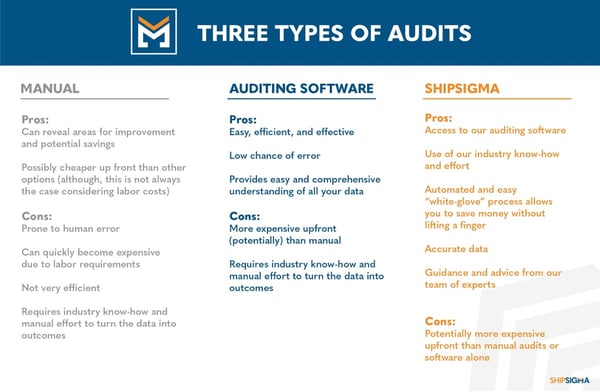
Manual auditing involves a team member or a small group downloading carrier invoices, comparing line items to shipment records by hand, logging discrepancies in a spreadsheet, and filing individual refund claims through the carrier's billing portal. The process is time-intensive, error-prone, and limited by attention span. A manual audit checklist typically covers 5 to 15 categories of error and catches the most obvious overcharges. Subtler discrepancies, particularly ones that require cross-referencing against contract terms or carrier-specific surcharge logic, go undetected.
Automated parcel auditing uses software and rules-based logic, often augmented by machine learning, to ingest invoice data through carrier portal integrations or EDI feeds, cross-reference it against shipment records and contracted rates, flag discrepancies across dozens of audit points, and file claims automatically. The same weekly billing file that takes a manual reviewer days to process is parsed end to end in hours.
The breadth and depth of automated auditing is what creates the financial gap. A 50-point audit identifies error categories that a 15-point checklist will miss, including contract-specific compliance issues, surcharge tier slippage, and patterns of repeated misclassification that span thousands of shipments. The audit also produces shipment-level data that supports follow-on cost reduction decisions: service-level mix analysis, accessorial fee patterns, and contract renegotiation evidence.
The financial gap shows up in client outcomes. One ShipSigma client, the Chief Financial Officer of a retail brand, described the impact of the automated audit directly: the platform identified that over 60 percent of the company's packages could have shipped ground without delaying arrival, producing savings beyond the recovered credits themselves. The audit data became the basis for a service-level shift that compounded across the rest of the year.
A third-party parcel audit service gains secure access to the shipper's carrier invoice data, typically through a carrier portal integration or an EDI feed authorized by the shipper. From the point of onboarding, every weekly billing file flows through the audit platform automatically.
The platform cross-references each invoice against shipment-level data (tracking records, delivery scans, contracted rates, accessorial eligibility) to identify every recoverable discrepancy across late deliveries, billing errors, surcharge misapplications, and contract deviations. Discrepancies are filed as refund claims directly with the carrier's billing system. Claim status is tracked through to resolution, and credits are verified against future invoices rather than left for the shipper to confirm. The cycle repeats weekly, with no required input from the shipper between onboarding and the regular savings reports.
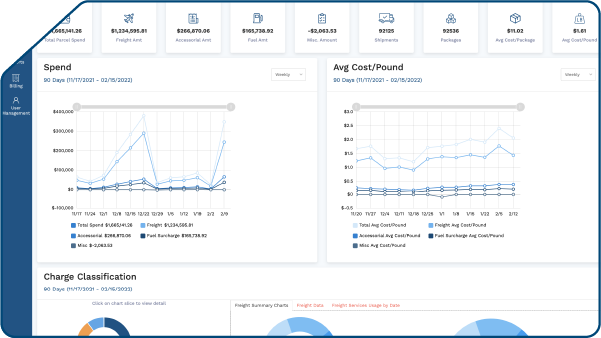
ShipSigma's audit platform identifies, submits, and verifies claims automatically. The weekly cadence is the operational discipline that keeps every claim inside the carrier filing window. Most reputable parcel audit services operate on a no-upfront-cost, contingency-fee model, which aligns the auditor's incentives with the shipper's cost recovery outcomes. There is no platform fee, no retainer, and no risk to the shipper. The auditor earns only when refunds are recovered.
The data the audit produces creates value beyond the direct refunds. Repeated dimensional reweighs on lightweight packaging surface a packaging optimization opportunity. Persistent residential misclassification on commercial accounts surfaces an address-database hygiene opportunity. Service-level patterns surface routing decisions that reduce the average cost per shipment. Each of these compounds across the life of the carrier relationship.
A shipping invoice audit and a parcel invoice audit describe the same process applied across UPS and FedEx accounts. The audit reviews every charge on every weekly billing file to confirm what was billed matches what the contract entitles the shipper to pay. Errors get refunded. Service failures get credited. Surcharges get reviewed against the actual characteristics of each shipment.
The data behind a shipping invoice audit also exposes structural cost issues that no single invoice would reveal on its own. Repeated dimensional weight charges on lightweight packaging. Address corrections that should not have triggered. Residential surcharges applied to commercial deliveries. Each is a small line item, and together they account for 2 to 7 percent of annual shipping spend at most high-volume shippers.
A weekly shipping invoice audit catches these issues before they compound into a full quarter of overpayment.
Accessorial charges are add-on fees applied by carriers for conditions beyond a standard pickup and delivery. The category includes residential delivery surcharges, address correction fees, delivery area surcharges, signature requirements, oversize and additional handling fees, and a long list of carrier-specific service add-ons. These fees are legitimate when correctly applied. They are also frequently misclassified or duplicated, and they represent one of the highest-yielding categories on a parcel invoice audit.
An automated audit flags accessorial errors by comparing the shipment's actual characteristics against the fees billed. Address type determines residential versus commercial classification. Package dimensions and weight determine oversize and additional handling eligibility. Delivery ZIP code determines DAS eligibility against the carrier's published surcharge ZIP list. Service-level commitments determine signature requirement validity. Any mismatch between the shipment's actual characteristics and the accessorial line items billed triggers a refund claim.
Carrier contract compliance checking is a critical second layer. A shipper's contract may cap certain surcharges, exclude specific charge categories, or define eligibility criteria that differ from the carrier's standard tariff. Auditing for compliance requires the platform to ingest the contract terms and apply them at the individual shipment level. ShipSigma's audit reconciles each accessorial against the active contract, not the published tariff, which surfaces compliance gaps a tariff-only audit will miss.
Fuel surcharge errors are a particular focus. FedEx and UPS publish weekly fuel surcharge tables and UPS fuel surcharge tables tied to EIA index rates. The ground tables follow the EIA on-highway diesel index. The air tables follow the U.S. Gulf Coast jet fuel index. Applying the correct percentage to every eligible shipment across a complex rate structure creates the conditions for systematic error, and the audit's reconciliation against the carrier's own published tables produces every recoverable instance.
The ROI of a parcel audit service is driven by three variables: the volume of shipments processed, the error rate across carrier invoices, and the breadth of audit points applied. For shippers spending between $500,000 and $100 million on parcel annually, a 1 to 3 percent recovery rate against total shipping spend translates to substantial annual savings before any service-level optimization is factored in.
The contingency model removes the financial risk from the calculation. There is no upfront cost, no platform fee, and no retainer. Any refund recovered exceeds the cost of the service by definition. Internal labor savings from eliminating manual review add a second layer of financial benefit. For finance and supply chain teams that previously spent 10 to 20 hours per week on carrier invoice review, the labor cost reclaimed is its own measurable return.
Savings extend well beyond direct refund recovery. Audit data reveals patterns in carrier billing, service utilization, and shipment routing that inform broader strategic decisions: which service levels are being over-purchased relative to required delivery windows, where accessorial fees are being triggered unnecessarily by address or packaging conditions, and how carrier contract terms could be restructured to reduce ongoing cost.
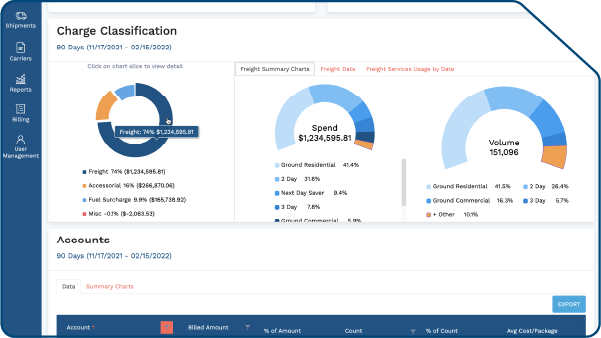
ShipSigma clients consistently recover refunds while uncovering operational savings that compound over time. The same retail brand referenced earlier discovered through audit data that over 60 percent of packages could have shipped ground with no impact on delivery timing. That finding alone generated savings beyond the audit refunds themselves. ShipSigma's broader client base has averaged a 25.2 percent reduction in annual parcel spend across more than 350 companies.
Invoice audit services give high-volume shippers an outside team responsible for catching every billable error their carrier produces. The work is continuous, not episodic. Every week, every invoice, every line item gets scanned against the contract and the carrier's published rates.
ShipSigma's invoice audit services run on AI trained on over 20 billion parcel and LTL data points. The platform identifies invalid charges, files claims on your behalf, and applies recovered credits against future invoices. There is no upfront cost and no long-term commitment, because the service pays for itself out of the credits it recovers.
The invoice audit is one half of the value. The data the audit produces is the other half. Persistent patterns in surcharge billing, service failures, and dimensional reweighs become the evidence base for the next carrier contract negotiation. Two services, one platform, compounding savings across the life of the carrier relationship.
UPS and FedEx use different rate structures, different surcharge categories, and different claim processes. An invoice audit calibrated to one carrier's billing logic will miss issues specific to the other. ShipSigma's platform audits both at full depth because the company's cost modeling was built against pricing and operational data from inside both carriers.
A UPS invoice audit reviews every weekly billing file for late shipments eligible for Guaranteed Service Refunds, dimensional weight reweighs, residential and address correction surcharges, demand surcharges, and fuel surcharges applied to the wrong base rate. ShipSigma's UPS invoice audit reconciles each charge against the specific contract terms and files refund claims directly with UPS Billing.
The audit also surfaces patterns specific to UPS billing logic. Repeated residential misclassification on commercial customers. Service guarantee suspensions applied during periods when guarantees were in force. Discount tier slippage when shipment volume crosses contract thresholds. Each pattern produces a recoverable credit and a data point for the next contract review.
A FedEx invoice audit applies the same methodology across FedEx Express, FedEx Ground, and FedEx Home Delivery invoices. The platform reviews every shipment for late delivery refunds under the Money-Back Guarantee, dimensional and minimum charge accuracy, residential and delivery area surcharges, address correction fees, and fuel rate applications.
FedEx-specific issues the audit catches include incorrect application of Express service commitments, ground residential surcharges on delivery area boundaries, and dimensional reweighs that exceed actual package dimensions. ShipSigma files claims, tracks them through resolution, and reports credits against future invoices on the same weekly cadence as the UPS workflow.
Shipping audit companies fall into three categories. Manual auditors operate on spreadsheets and offshore labor. Software vendors sell a license and a dashboard. Full-service providers handle the audit, the claims, and the reporting end to end. Each category has a different cost structure, a different recovery rate, and a different demand on the shipper's internal team.
The questions that separate shipping audit companies on outcomes rather than promises:
ShipSigma is built on over 20 billion parcel and LTL data points and 250+ years of combined carrier experience. The platform runs a 50-point weekly audit across every UPS and FedEx invoice, files and verifies claims automatically, and feeds the same data into ShipSigma's carrier contract engineering work. There is no upfront cost and no long-term commitment. ShipSigma's average client sees a 25.2 percent reduction in annual parcel spend.
Five evaluation criteria separate a parcel audit company that will recover meaningful credit from one that will miss the categories that drive the largest dollar return.
Breadth of audit coverage. The number of audit points applied per invoice is the clearest indicator of platform capability. A 10-to-15-point audit will miss categories that a 50-point audit will catch, particularly in accessorial and contract compliance reviews. Ask any prospective audit company for the full list of audit points the platform applies.
Automation and speed. Carrier refund windows are narrow. A parcel audit company that operates on a weekly automated cadence will consistently capture claims that a slower or queue-based process will forfeit. Confirm that claim identification, submission, and verification are all handled automatically rather than triggered by manual review.
Data depth and platform intelligence. The quality of insights an audit company can produce depends on the breadth of data underlying the platform. ShipSigma's AI is built and trained on over 20 billion parcel and LTL data points, which is what allows the platform to identify anomalies and cost patterns that narrower platforms do not detect.
Dedicated advisory support. The best parcel audit companies combine platform intelligence with human expertise. ShipSigma's team works alongside client teams, advising on the impact of every cost decision, audit finding, and surcharge adjustment throughout the year, not only during onboarding or at contract renewal.
Pricing model and risk profile. Reputable parcel audit services operate on a no-upfront-cost, contingency-fee basis. Platform fees and retainers paid before any recovered savings work against the shipper's interests. The contingency model aligns the auditor's incentives with the shipper's cost recovery goals.
Carrier and service coverage matters as well. Confirm that the audit company covers every carrier in the shipper's network, including UPS, FedEx, regional carriers, and LTL providers, and that the platform handles freight invoice audit alongside small parcel for shippers with mixed shipping profiles.
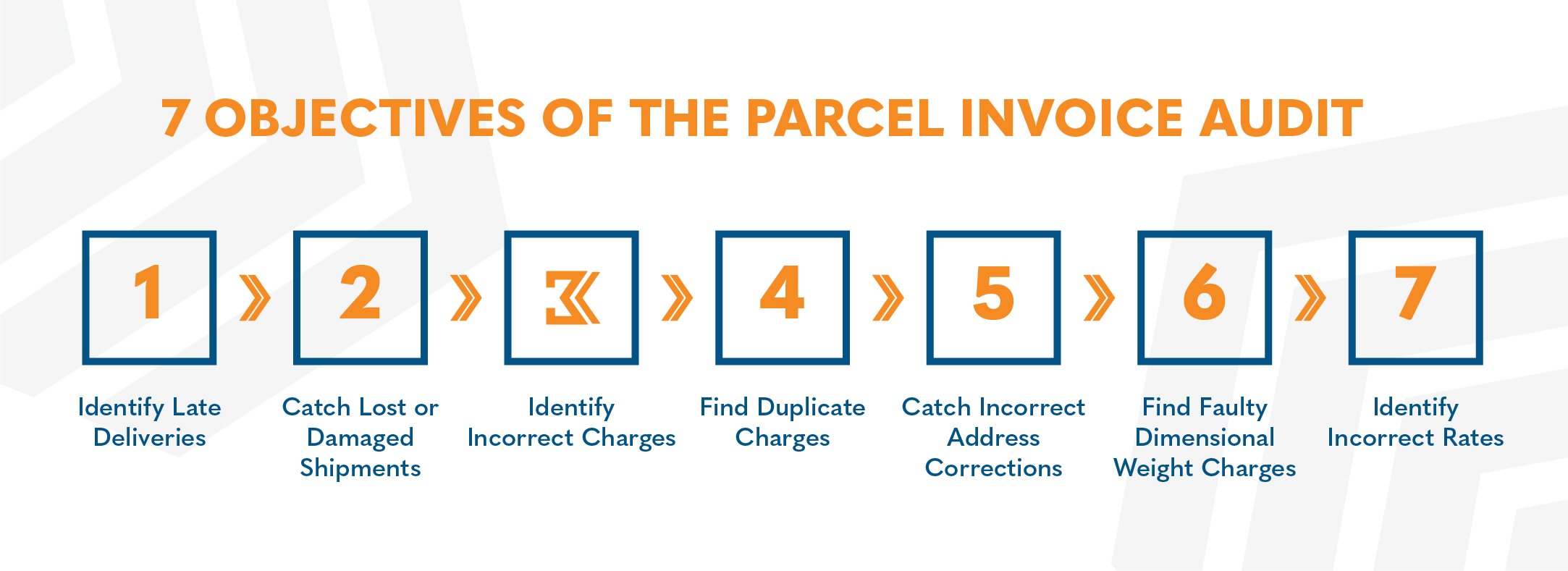
The audit identifies seven categories of recoverable issue across every weekly UPS and FedEx billing file. Each one has a distinct diagnostic and a distinct claim path.
Every week a parcel invoice goes unaudited is a week of recoverable credit that closes inside the carrier's filing window. ShipSigma's platform applies a 50-point weekly audit, files claims automatically, and verifies credits against future invoices with no upfront cost. Request a free analysis to see what your account is currently leaving on the table.
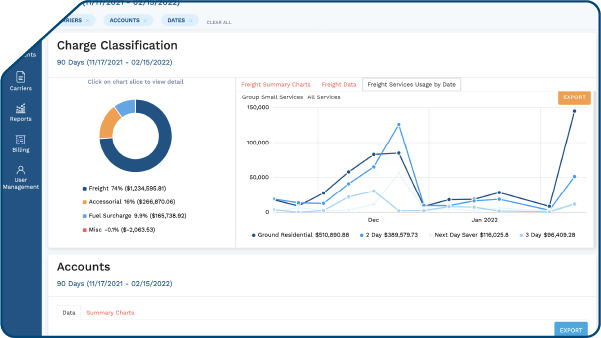
Discrepancies are identified by cross-referencing each shipment's actual data (weight, dimensions, zone, service level, delivery status, address type) against the line items billed on the carrier invoice. Any mismatch between shipment reality and invoice charge becomes a recoverable claim, and automated platforms handle this cross-reference across tens of thousands of line items per billing cycle.
Carriers bill the greater of actual weight or dimensional weight, where DIM weight is the package's cubic volume divided by the carrier's DIM factor. When the carrier's reweigh applies dimensions larger than the package's actual cubic volume, the shipper is billed at an inflated DIM weight. The error is recoverable when an audit reconciles the reweigh data against the shipper's manifest dimensions.
Parcel audit software catches late delivery refunds, dimensional weight errors, duplicate charges, fuel surcharge errors, accessorial misapplications such as residential and address correction fees, and contract non-compliance where carrier billing deviates from negotiated rates and discounts. The breadth of coverage depends on the platform: a 50-point audit catches categories a 10-point checklist will miss.
Carrier contract compliance checking reconciles each invoice line item against the shipper's specific contracted rates, discounts, surcharge caps, and tier thresholds rather than the carrier's published tariff. The audit identifies every charge that deviates from the active contract and files a claim for recovery. Without this layer, an audit will miss compliance violations that only appear when shipment-level data meets contract-specific terms.
A third-party parcel auditor accesses the shipper's carrier invoice data through a portal integration or EDI feed, cross-references each invoice against shipment-level records and contracted rates, files refund claims directly with the carrier's billing system, and verifies that recovered credits land against future invoices. The full cycle runs weekly with no input required from the shipper between onboarding and the regular savings reports.
Direct refund recovery generally runs 1 to 3 percent of total parcel spend, but the full financial picture includes labor savings from eliminating manual review and broader cost optimization driven by audit data. ShipSigma's average client sees a 25.2 percent reduction in annual parcel spend across the combined audit and contract engineering work, well beyond direct refund recovery.