
The Critical Role of Cost Reduction in Enhancing Enterprise Value
Cost reduction is a strategic approach undertaken by businesses to decrease their expenses and improve profitability. It involves identifying and eliminating non-essential spending, optimizing operations, and leveraging technology to achieve more efficient processes. The importance of cost reductio…

Cost reduction is a strategic approach undertaken by businesses to decrease their expenses and improve profitability. It involves identifying and eliminating non-essential spending, optimizing operations, and leveraging technology to achieve more efficient processes. The importance of cost reduction cannot be overstated, especially in its capacity to bolster enterprise value creation. By minimizing costs, a business can free up resources, enhance its financial health, and increase its attractiveness to investors and stakeholders alike.
The Purpose of Cost Reduction
One of the primary purposes of cost reduction is to bolster a company's profitability and cash flow. This is achieved by streamlining operations and allocating resources more effectively. By cutting unnecessary expenses, companies can improve their bottom line, providing the financial flexibility needed to navigate market fluctuations. Additionally, cost reduction is instrumental in improving operational efficiency, ensuring that businesses can deliver products and services without wasting resources, which can lead to sustained success.
Benefits of Reducing Cost
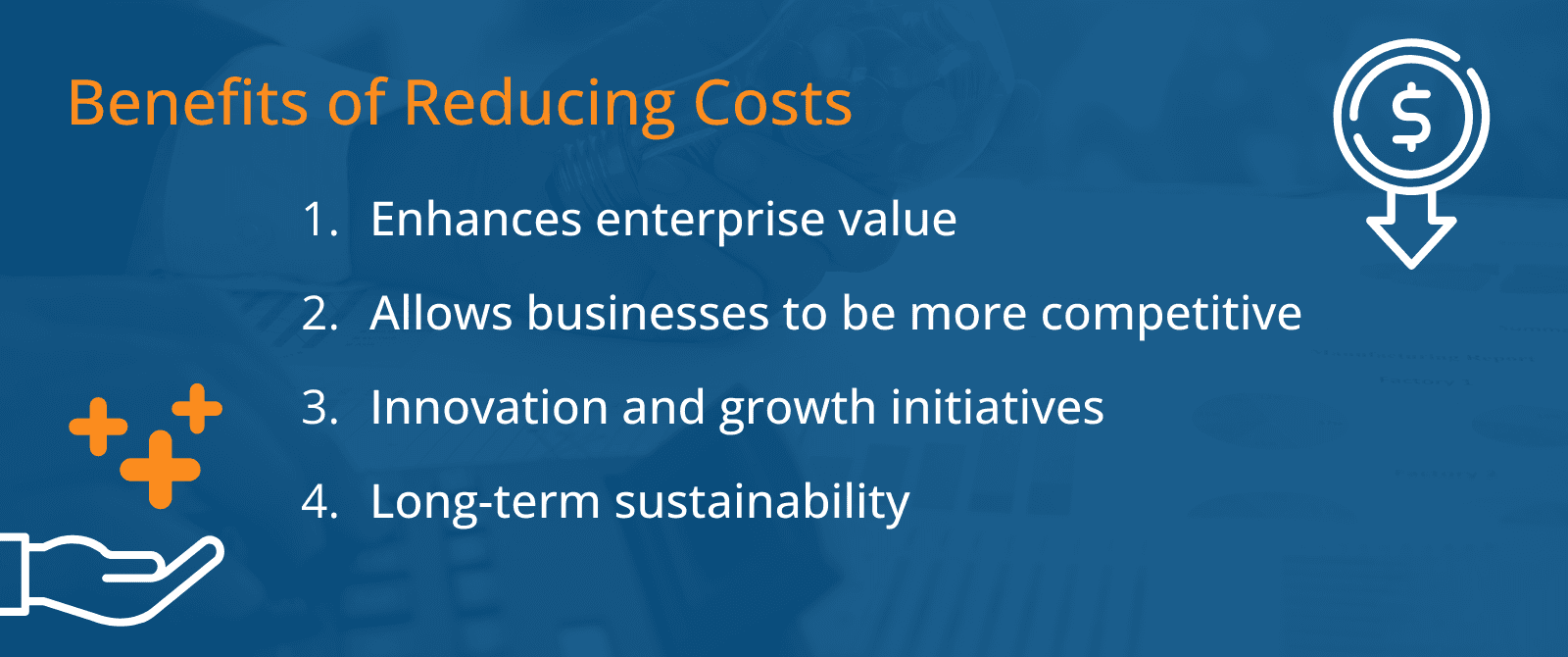
Reducing costs has a multitude of benefits. For one, it enhances enterprise value by improving the financial statements, making the company a more attractive investment. It also allows businesses to be more competitive, potentially increasing their market share as they can offer lower prices or reinvest savings in other areas like product development. Furthermore, the resources freed up by cost reduction can be funneled into innovation and growth initiatives, propelling the company forward and ensuring long-term sustainability.
Cost Reduction in Meeting Competition Effectively
To meet competition head-on, companies can use cost reduction to lower their prices without sacrificing margins, appealing to price-sensitive customers. Moreover, funds saved through cost-cutting measures can be used to improve product quality and customer satisfaction, thereby strengthening the brand. Cost reduction also enables reinvestment in marketing and sales initiatives to boost visibility and drive revenue.
Growth Equity Trends and Cost Reduction
Growth equity refers to investments made in growth-stage companies that have a proven business model and are seeking funds to scale their operations. For these companies, cost reduction is vital to maximize the investment's potential. Efficient use of funds and lean operations can lead to better margins and more sustainable growth. Examples include automation of labor-intensive processes and strategic outsourcing.
Private Equity Fundraising Environment and Cost Reduction
The private equity fundraising environment is competitive, and cost reduction can be a compelling selling point for firms looking to attract investors. By demonstrating an ability to effectively manage and minimize costs, companies can showcase financial discipline and operational efficiency, which are key metrics for investors.
Create Value with ShipSigma
Cost reduction is a powerful tool for fostering enterprise value creation. In today's business landscape, its role is multifaceted and extends beyond simple expense management. As demonstrated, cost reduction intersects with competitiveness, investor attractiveness, and operational excellence.
At ShipSigma, we save our customers an average of 25.2% on their parcel shipping costs with as little as four hours of time invested. We guarantee the shipping savings that we find, allowing our customers the ability to embrace cost reduction strategies as not just a matter of survival, but a strategic move towards ensuring their company's growth and long-term success.
Frequently Asked Questions About Cost Reduction and Enterprise Value
How does reducing expenses improve enterprise value?
Cutting expenses improves financial statements directly, making the business a more attractive investment. Resources freed by cost reduction flow into product development, innovation, and growth initiatives that increase long-term company value.
How can businesses use cost savings to compete more effectively on price?
Cost reduction allows companies to lower their prices without sacrificing margins, appealing to price-sensitive customers. Those savings also fund reinvestment in marketing and sales initiatives, increasing visibility and driving revenue.
What is growth equity and why does cost reduction matter for growth-stage companies?
Growth equity refers to investments in growth-stage companies that have a proven business model and are seeking funds to scale their operations. For these companies, efficient use of funds and lean operations produce better margins and more sustainable growth, making cost reduction central to maximizing investment potential.
What financial metrics do private equity investors prioritize when evaluating cost management?
Private equity investors focus on financial discipline and operational efficiency as key indicators of a company's ability to manage and minimize costs. Demonstrating effective cost control positions a company as a more compelling candidate in a competitive fundraising environment.
What operational improvements result from a structured cost reduction program?
Cost reduction streamlines operations and reallocates resources to their most productive uses, directly improving cash flow and bottom-line profitability. Companies also eliminate waste in delivering products and services, which builds the capacity to sustain performance through market fluctuations.