
Small Parcel Negotiations
High-volume shipping is expensive and a business cost that you can't avoid. With rising rates, high fuel costs, and a proliferation of fees and surcharges, high shipping costs can feel out of control and simultaneously inevitable. There's good news—that's not actually true. You can reduce your ship…
High-volume shipping is expensive and a business cost that you can't avoid. With rising rates, high fuel costs, and a proliferation of fees and surcharges, high shipping costs can feel out of control and simultaneously inevitable. There's good news—that's not actually true. You can reduce your shipping costs with the right technology. We're exploring how to negotiate shipping rates for favorable outcomes in this short guide to small parcel negotiation.
Can You Negotiate Shipping Rates for Small Parcels?
Yes, you absolutely can—and should—negotiate shipping rates for small parcels. High-volume shippers can often receive discounted rates by negotiating with UPS and FedEx. However, it's important to note that due to this duopoly in the marketplace, the “discounted” rate could still be sky-high. Additionally, with contracts that include many factors and surcharges, it can be easy to overlook terms that end up costing you more than anticipated.
With ShipSigma, you can use your own data with our technology for detailed and specialized insight into your specific shipping costs. By taking the raw invoice data and layering on the cost of the carrier, you can see all of the data that is outside of your view and leverage it to negotiate a truly fair rate.
Why Is Contract Negotiation Important?
Negotiating your small parcel contract is important for one simple reason: to save your company money. When negotiating contracts with vendors, it may feel like you have all the bargaining power and leverage. However, with small parcel shipping, you are basically forced to sign with either UPS or FedEx. With only two options, these carriers have had all the power, especially with the obfuscation of their real profit margins. To that point, the COO of one of our customers shared their experience: “Until ShipSigma, we had no idea of the unfair market we were playing in. ShipSigma leveled the playing field and found us nearly 25% in savings.”
How Do You Negotiate a Parcel Contract?
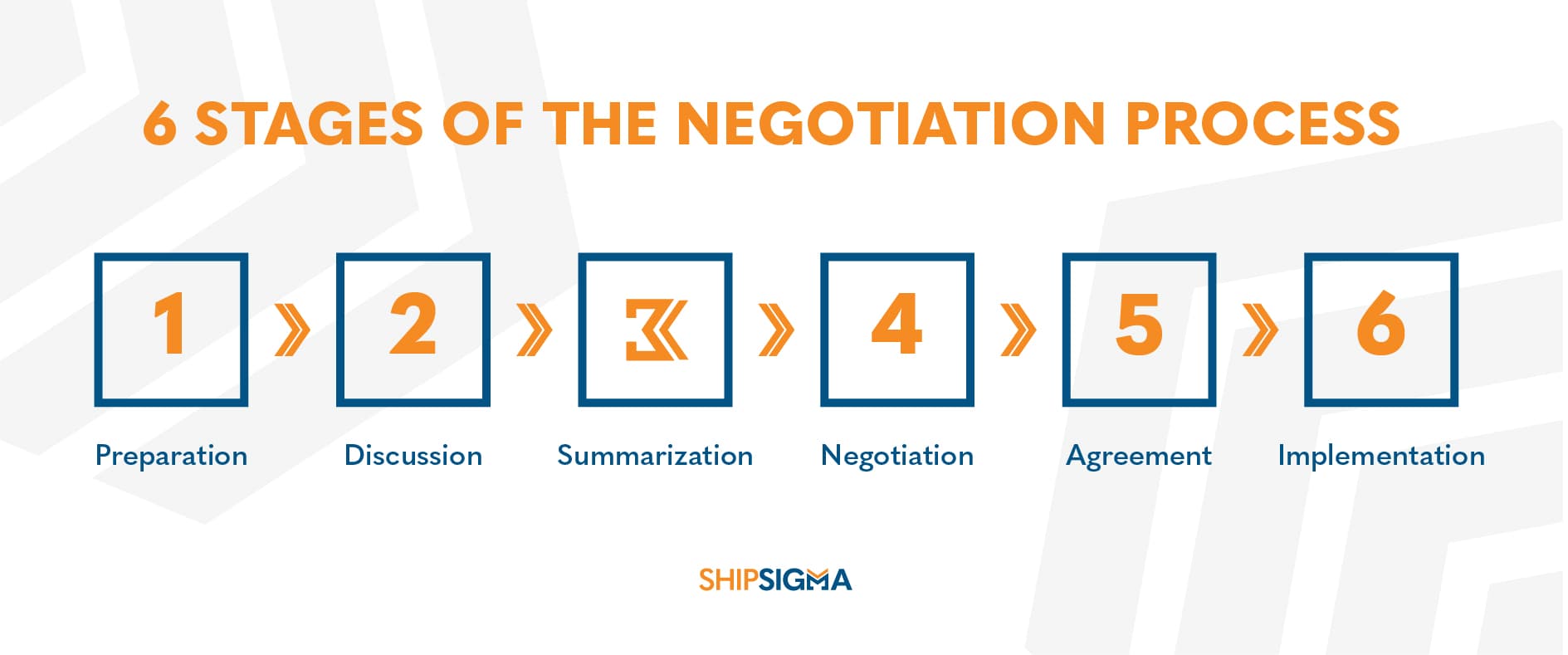
There are often 6 stages of the negotiation process. These stages are:
1. Preparation
It's important to do your research both internally and externally. Conducting a parcel invoice audit can give you the data to understand your position. With external data, like ShipSigma's AI-powered platform managing and providing insights from over a billion dollars in shipping spend, you can instantly know your savings before you negotiate.
2. Discussion
At this stage, both the shipper and the carrier engage with each other directly and share their points. Keeping the discussion grounded in facts, rather than feelings or assumptions, will help the conversation be productive. The purpose of this stage isn't to win an argument but rather for each party to provide perspective and understand each other.
3. Summarization
After the discussion, both parties should summarize their point of view. This will help to clarify the goal of the negotiation and help everyone understand the expectations. This should be a very short step that helps prevent misunderstandings in the next stage.
4. Negotiation
A good negotiation will end in a win-win solution for everyone involved. With a small parcel negotiation, the win-win scenario is that the business doing the shipping saves money on their spend and the carrier secures a contract with a reasonable profit margin. ShipSigma empowers you during this phase to know what to ask for and how to ask for it. You'll already know how much you can save and how your rates stack up so that you can negotiate your way to a win-win solution.
5. Agreement
The active portion of the negotiation phase concludes with agreement. Once the rates and discounts are negotiated and agreed upon, the details will be put into your contract and sealed with signatures.
6. Implementation
The last stage of negotiation is actual implementation. Your shipping rates should drop, and you should see your new terms reflected in your invoices. In order to make sure the right rates are being applied, you can conduct a small parcel audit or use ShipSigma's Audit & Reporting platform to automatically identify all invalid charges and put that money back in your pocket.
Save On Your Shipping Spend With ShipSigma
We're on a mission to help you save money. We reduce costs for high-volume shippers through automatic billing error refunds from parcel invoice audits, carrier contract negotiation, and shipping insights & analytics for small parcels and freight. With our white-glove service and AI-powered platform, you'll be able to see visible, meaningful results quickly. Ready to start saving? Connect with us today.
Frequently Asked Questions About Small Parcel Negotiations
Which carriers can be negotiated with for small parcel rates?
UPS and FedEx are the two primary carriers for small parcel shipping, and both are open to rate negotiation. Because only two major options exist in this market, shippers must understand that these carriers hold significant power in contract discussions.
What is the first step in preparing for a parcel contract negotiation?
Conducting a parcel invoice audit is the recommended first step, giving shippers the data needed to understand their cost position before approaching a carrier. External benchmarking data drawn from large pools of shipping spend reveals potential savings before any formal discussion begins.
How many stages does a small parcel contract negotiation involve?
A small parcel contract negotiation follows six stages: preparation, discussion, summarization, negotiation, agreement, and implementation. Each stage serves a distinct purpose, from gathering data before talks begin to confirming that agreed rates appear correctly on invoices after the contract takes effect.
What does a win-win outcome look like in small parcel negotiations?
A successful outcome means the shipping business secures lower rates on its spend while the carrier retains a contract with a reasonable profit margin. Reaching this balance requires knowing your rate position in advance so the negotiation targets a fair result rather than an unrealistic concession from either side.
How do you verify that negotiated parcel rates are being applied correctly after a contract is signed?
After a contract is signed and implemented, shippers should run a small parcel audit to confirm the new terms are reflected in invoices and to identify any invalid charges. Automated audit platforms flag billing discrepancies and recover overcharges without requiring manual invoice review.